Short answer: Well water purification is the full treatment train that turns raw groundwater into water you can drink, cook and wash with safely. In the Texas Hill Country it normally means sediment removal, iron and sulfur treatment, softening, and disinfection where bacteria are present.
What this guide covers
- Why Hill Country wells need purification
- Signs your well needs attention
- The stages of well water purification
- Which stages does your well actually need
- Bacteria, nitrates and the health-critical results
- What well water purification costs to run
- Keeping the system honest
- Buying a property on a well
- The mistakes we are called out to fix
- Frequently asked questions
Why Hill Country wells need purification
Private wells are not regulated. No agency tests them, no report arrives each year, and nothing is treated before it reaches the tap. Well water purification exists because that responsibility falls entirely on the property owner.
The geology sets the agenda. Fractured limestone lets water move quickly, carrying minerals, sediment and sometimes surface contamination straight into the aquifer.
That is why two neighbouring properties can need very different systems. Well water purification is specified per well, from a test, not from a postcode.
- 0agencies testing your private well for you
- 15-25grains per gallon typical Hill Country hardness
- Annualrecommended testing for bacteria and nitrates
- 24/7emergency service across the Hill Country
Signs your well needs attention
Staining is the most visible cue. Orange marks point to iron, black specks to manganese, and a chalky film to hardness.
Smell matters too. A rotten egg odour is hydrogen sulfide, and a musty or earthy smell can indicate organic matter or bacteria.
Some problems are invisible. Nitrates and coliform bacteria have no taste, colour or smell, which is precisely why well water purification decisions should follow a laboratory test rather than your senses.

The stages of well water purification
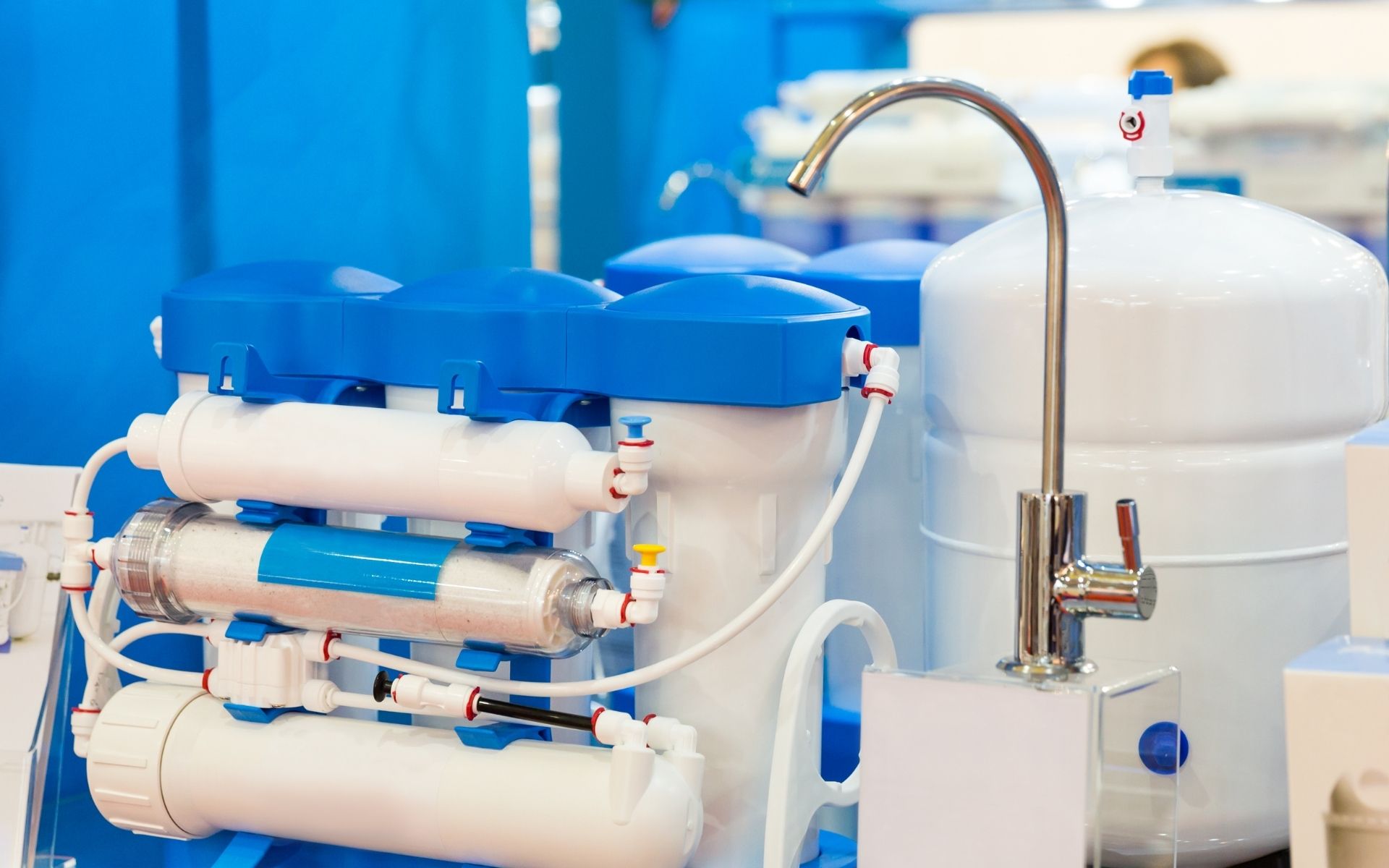
A complete system is a sequence, and the order is fixed. Each stage protects the one behind it.
Skipping a stage to save money almost always costs more later, because the equipment downstream absorbs the damage.
- 1SedimentGrit and clay removed first so nothing downstream is abraded.
- 2Iron and sulfurOxidised and filtered before they can foul softener resin.
- 3SofteningHardness removed by ion exchange once the water is clean.
- 4DisinfectionUltraviolet last, because it needs clear water to work.
Which stages does your well actually need
Very few Hill Country wells need every stage. The test tells you which ones apply, and a good proposal explains why each vessel is there.
| Test result | What it means | Stage required |
|---|---|---|
| Hardness 15-25 gpg | Normal for the region | Ion-exchange softener |
| Iron above 0.3 mg/L | Staining, resin fouling | Oxidising iron filter |
| Hydrogen sulfide | Rotten egg odour | Aeration or catalytic carbon |
| Turbidity after rain | Surface water reaching the well | Sediment pre-filtration |
| Coliform positive | Contamination at the wellhead | Shock chlorination then UV |
| Nitrates elevated | Agricultural or septic influence | Reverse osmosis at the tap |
Bacteria, nitrates and the health-critical results
Most well problems are nuisances. Two are not. Coliform bacteria and nitrates are the results that carry genuine health weight, and they are the reason laboratory testing matters.
A positive coliform result usually points at the wellhead rather than the aquifer. We inspect the cap, the casing and the surface drainage before recommending equipment, because ultraviolet disinfection fitted to a well that is open to surface water only masks the problem.
Nitrates matter most where there is agriculture or older septic nearby, and they are especially significant for households with infants. Removing them needs reverse osmosis or a specific ion-exchange resin, not filtration.

What well water purification costs to run
Installation is the smaller number over ten years. Running cost is what separates the options.
Media beds are gradually consumed and typically need replacing every five to ten years. Ultraviolet lamps are annual. Sediment cartridges run on a schedule set by your water rather than the calendar.
We quote well water purification with the capacity, the consumable cost and the service interval written down, so you can compare proposals on the same basis.
Keeping the system honest
Retest annually for bacteria and nitrates, and again after flooding, pump work, or any sudden change in taste, smell or colour.
Keep the paperwork. Test results, media types, vessel sizes and install dates make future servicing faster and matter at resale.
We service every major brand of well water purification equipment, including systems we did not install, and we will say plainly when a repair beats a replacement.
Buying a property on a well
If you are buying acreage in the Hill Country, commission independent well water purification testing before closing rather than relying on a seller report. It is a small cost against a large purchase, and the results change what you should budget for.
Ask three questions of the seller: when was the well drilled, how deep is it, and when was the pump last replaced. Those answers explain a great deal about what the water will do.
Look at the wellhead itself. A cracked cap, a missing sanitary seal, or ground sloping toward the casing all invite surface contamination, and no amount of well water purification downstream compensates for a well that is open to the surface.
The mistakes we are called out to fix
The most frequent is a softener installed with no iron removal ahead of it. The resin fouls within a couple of years, capacity collapses, and the household assumes the softener was faulty.
The second is ultraviolet disinfection fitted to cloudy water. Particles shield bacteria from the lamp, so the system passes its indicator light while doing very little. Effective well water purification puts sediment removal first for exactly this reason.
The third is equipment sized to a catalogue rather than a flow rate. Well water purification that drops household pressure gets bypassed within a month, which means the household paid for treatment it is no longer using.
Frequently asked questions
Is well water purification always necessary?
No. Some Hill Country wells test clean apart from hardness, and a softener alone is the right answer. Well water purification is specified only where the results justify it.
Does purification make well water safe to drink?
It can, but only if the design matches the test. Bacteria need disinfection, nitrates need reverse osmosis, and neither is addressed by filtration alone.
How often should I test?
Annually for bacteria and nitrates, plus a retest after flooding, pump work or any sudden change in the water.
Can you service another company system?
Yes. We maintain and repair well water purification equipment from every manufacturer, including systems we did not install.
Will a softener remove bacteria?
No. Softening exchanges hardness minerals and does nothing to microorganisms. That needs ultraviolet disinfection on clear water.
Get your well tested before you buy anything
We test on site for free across Boerne, Kerrville, Fredericksburg, New Braunfels, Canyon Lake and the wider Hill Country. You get the numbers in writing, with no obligation.
Related reading: well water filtration, well water testing, well water treatment, free water testing.
More from this guide: well water filtration stages, sediment filtration and removing iron from well water. Also worth reading: hard well water solutions.
Sources and further reading: Texas Well Owner Network (Texas A&M AgriLife), EPA national primary drinking water regulations, Texas Water Development Board groundwater data.