
Comal County is split between city supply and private wells, and the two need very different systems. We have been sizing both across New Braunfels since 1989.
New Braunfels straddles the Balcones Escarpment, which is why it has springs at all. Water here comes off the Edwards and Trinity aquifers, both of which run through limestone, and both of which deliver a heavy calcium and magnesium load to whatever draws from them.
In town, most homes are on the municipal supply, which arrives treated and chlorinated and still hard. Out toward Bulverde, Spring Branch and the river, private wells are common, and those bring iron, manganese and sometimes sulfur along with the hardness.
The practical consequence is that two houses a few miles apart can need completely different systems. Which is why nobody should be quoting either of them without testing first.
Everything we do is available across New Braunfels, Gruene and the wider Comal County area.
Ion-exchange softening sized to your hardness reading, for city and well supplies.
Iron, sulfur, sediment, bacteria and pH, the pre-treatment a well needs.
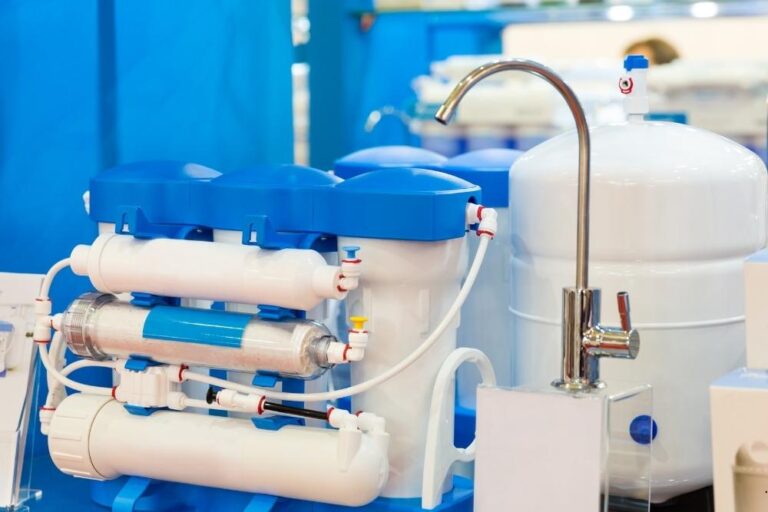
Carbon and sediment stages for chlorine, taste, odor and grit at every tap.
A private well arrives with nothing removed. Alongside the hardness you may have iron staining fixtures, manganese darkening laundry, sulfur making the hot water smell, sediment scoring valve seats, and bacteria that no amount of tasting will reveal.
Each of those needs its own stage, and the order they go in determines how long the system lasts. Put a softener in front of untreated iron and you will be replacing resin in two years rather than ten.

We have been testing and treating water in this part of Texas since 1989, and we answer the phone ourselves.
Family-owned, locally operated, and still on the same phone number after thirty-six years.
Class 3 certified by the Texas Water Commission and licensed by the Water Quality Association.
Rainsoft, Culligan, Rayne, Kinetico, Hague, Sears, General Electric and more, whoever installed it.
A failed system does not wait for business hours, and neither do we.
We test at your property, explain the numbers and put the recommendation in writing, at no charge.
Capacity and stages chosen from your test result, not from a regional average or a catalogue page.
If you are close to New Braunfels and not listed, call anyway. We probably cover you.
Well country, with iron and sulfur to match.
City supply, hard water and everything north of Loop 1604.
Hays County homes and student rentals alike.
Yes. Both the Edwards and Trinity aquifers move through limestone, and the Hill Country region commonly runs 15 to 20+ grains per gallon. The municipal supply is treated for safety rather than for hardness, so it arrives hard.
Almost certainly. A well has had nothing removed before it reaches you, so hardness usually arrives alongside iron, sediment and sometimes sulfur or bacteria. That needs several stages in a specific order rather than a softener alone.
Only from a laboratory test. Coliform and E. coli have no taste, no smell and no appearance, and Comal County wells are exposed to surface run-off during heavy rain like everywhere else in the Hill Country.
Yes, along with Canyon Lake, Garden Ridge and the rest of Comal County. Free on-site testing across all of it.
Very possibly. Scale insulates the heating element and the tank base, so the unit runs hotter and harder than designed. Early water heater failure is one of the clearest symptoms of untreated hard water.
Yes, whoever installed it. We repair and maintain every major brand, and taking over a system from a company that has moved on is a routine part of our work.
New Braunfels water is hard. The Edwards Aquifer underlies the area, and water moving through limestone picks up the calcium and magnesium that make hardness, typically in the mid to high teens in grains per gallon.
New Braunfels has grown fast, and a good share of that growth is on acreage outside the city on private wells. Those properties have a very different starting point from a house on the municipal supply.
On New Braunfels city water the job is usually straightforward. A softener sized to your measured hardness, plus carbon filtration if the chlorine taste and smell bother you.
On a New Braunfels well the sequence is what matters. Sediment first, then iron and sulfur, then softening. Softening ahead of iron removal destroys resin, and it is a mistake we are called out to often.
Comal County wells vary considerably. Properties toward Canyon Lake and Spring Branch often show iron or sulfur, while others test clean apart from hardness, so we test each address rather than generalising.
The rivers matter for sediment. After heavy rain some New Braunfels wells pull fine grit and clay for a few days, which is why a sediment stage protects everything downstream.
We have covered New Braunfels and the surrounding Hill Country since 1989, and we service every major brand including systems we did not install.
Emergency work runs around the clock, because a failed softener or a bypassed system in New Braunfels is not a next-week problem.
Testing is free and carries no obligation. A good share of New Braunfels visits end with us confirming the water is fine and recommending nothing.
| New Braunfels supply | Common issue | What we usually fit |
|---|---|---|
| City water | Hardness in the mid to high teens | Correctly sized ion-exchange softener |
| City water | Chlorine taste and smell | Whole-house carbon filtration |
| Private well | Orange staining from iron | Iron filter ahead of the softener |
| Private well | Rotten egg smell | Aeration or catalytic carbon |
| Private well | Cloudy after heavy rain | Sediment pre-filtration |
| Any supply | Flat drinking water | Reverse osmosis at the kitchen tap |
Is New Braunfels water hard? Yes. Most of the area tests in the mid to high teens in grains per gallon, which is hard to very hard.
I am on city water. Do I still need a softener? Usually yes. Municipal treatment makes New Braunfels water safe, not soft.
We are on a well outside town. Where do we start? With a free test. Private wells are unregulated, so nobody has checked yours unless you arranged it.
Do you cover Gruene and Spring Branch? Yes, along with Canyon Lake and the wider Comal County area.
Comal County is one of the fastest growing counties in Texas, and a great deal of that building has happened on land that has never had a municipal connection. For those New Braunfels households the well is the water supply, and nobody has tested it unless the owner arranged it.
The aquifer picture is more complicated here than in some parts of the Hill Country. Depending on depth and location a New Braunfels well may draw from the Edwards or the Trinity, and the two behave differently in terms of hardness, iron and sulfur.
That is the practical reason we will not quote from a postcode. Two New Braunfels properties on the same road can need different equipment because they are drawing from different depths.
Hardness is the constant. Whether the supply is municipal or private, calcium and magnesium are present in quantities that scale heaters, dull laundry and fight lather, and ion exchange is the only method that genuinely removes them.
Iron is the most common well complication locally, followed by sulfur. Both have to be handled before the softener rather than after it, and getting that order wrong is the single most expensive mistake in well water treatment.
For anyone moving to New Braunfels, the advice is simple. Test the water before buying equipment, keep the results, and retest annually if you are on a well. Every sensible decision follows from those numbers.
Check any of this against the primary sources:
Free on-site testing across New Braunfels, Gruene, Bulverde, Spring Branch and the rest of Comal County.