
Installing a well system is a day. Keeping it working is the next fifteen years. We service, repair and maintain well treatment across the Hill Country, including systems we did not install.

Treatment equipment does not usually announce that it has stopped working. Media exhausts gradually, resin fouls slowly, a UV lamp keeps glowing for months after it has stopped producing enough output to disinfect anything. By the time somebody notices staining coming back or the smell returning, the system has often been underperforming for a year.
That is why well systems are serviced on a schedule rather than on complaint. An annual visit checks media condition, backwash settings, valve operation, pressure and lamp output, and catches the things that would otherwise become the reason you are replacing a tank.
We would rather have the maintenance contract than the emergency call-out. Both are available, and only one of them is cheap.
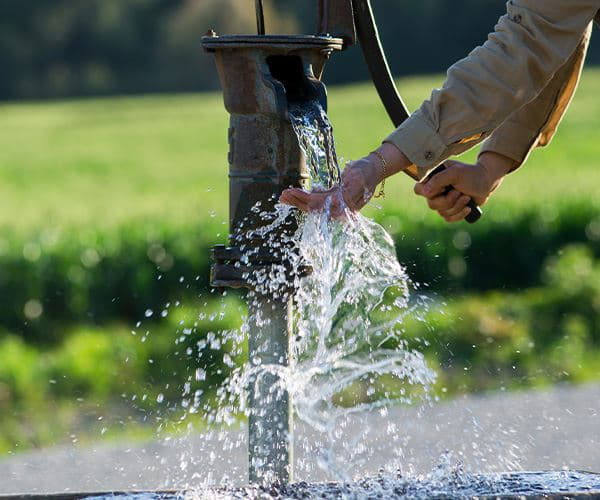
Any one of these means something upstream has stopped doing its job. Two or more means it has been going on a while.
Orange or brown marks reappearing in toilets and laundry means the iron stage is no longer holding. Usually exhausted media or a backwash setting that has drifted.
Rotten-egg sulfur coming back, particularly in hot water, points at spent oxidising media or an air injection system that has stopped drawing.
A packed or fouled media bed restricts flow. So does a blinded sediment filter nobody has changed. Both are cheap to fix and expensive to ignore.
Soap not lathering and spotting returning on glassware means the softener has stopped exchanging, whether through fouled resin, a stuck valve or an empty brine tank.
Lamps degrade steadily and stop disinfecting long before they stop lighting up. A visibly working lamp is not evidence of a working UV system.
A softener cycling every day is either undersized, set wrong, or fouled. All three waste salt and water, and all three shorten what is left of its life.
Scheduled maintenance, one-off repairs, and taking over systems that have been neglected for years.
Media condition, backwash timing and flow, valve operation, pressure, brine draw and UV output, all checked and adjusted, with a written note of what we found.
Every media has a working life. We replace it before performance falls away, and we clean or replace softener resin that iron has fouled.
Lamps annually, quartz sleeves as needed. This is the single most commonly neglected item on a well system, and the one with the clearest health consequence.
Failed valves, leaking tanks, stuck heads and dead controllers, on every major brand, at any hour. We do not need to have installed it.
You do not have to replace a working system to get it serviced, and calling us does not void anything. If the valve is failing, the resin is spent or the media bed has packed down, we will tell you what it costs to fix before we talk about replacing it.
A great deal of our well work is taking over systems installed by somebody who has since disappeared, retired or stopped answering. That is a normal way for a relationship with us to start.
Nobody should buy a water system from a brochure. Here is what actually happens.
We test what is coming out of your tap or your well, hardness in grains per gallon, iron, pH, odor, sediment, and look at your plumbing. About twenty minutes, no charge.
A written recommendation and a firm price based on your numbers and your household use. If a smaller unit does the job, we say so.
Installation by a licensed technician, then filters, settings checks and 24/7 repair for as long as you own the system.
We are not a franchise and we are not a call centre. The person who tests your water works for the company that installs and services it.
Deep roots in San Antonio and the Hill Country, and customers who have been with us for decades.
Class 3 certified by the Texas Water Commission and licensed by the Water Quality Association.
We install and service all major brands, even if the system was not purchased from us.
A leaking or failed system does not wait for business hours. Neither do we.
From single-family homes to restaurants, salons and industrial facilities, sized to the load.
On-site testing and a written estimate cost nothing, with no obligation attached.
Service keeps a system alive. These cover how it was designed and what it is treating.
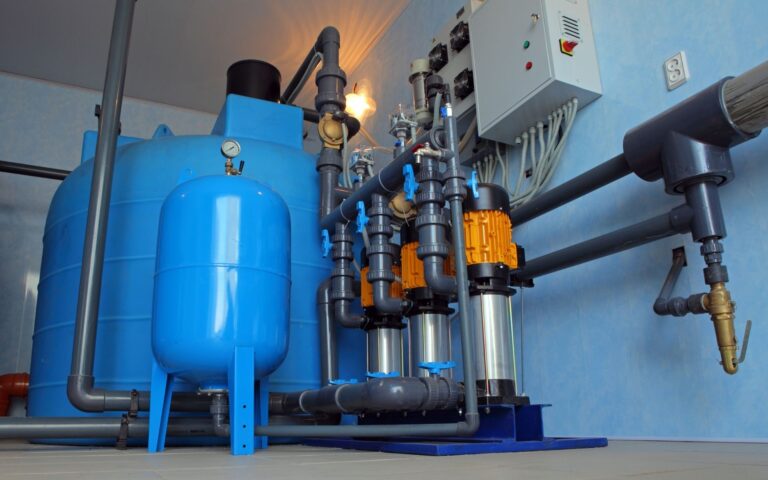
Iron, sulfur, sediment, bacteria and pH, the pre-treatment a well needs.

Media, stages and sizing for iron, manganese, sulfur and sediment on a private well.

Annual testing, bacteria panels and the checks worth running after a flood.
Yes, and it is a large part of our well work. We repair and maintain every major brand, and taking over a system from a company that is no longer around is a very common way for customers to find us.
Annually as a baseline. Sediment cartridges need changing more often than that, UV lamps need replacing every twelve months regardless of appearance, and media replacement intervals depend on the media and your water.
You largely cannot, by looking. Lamps continue to emit visible light well after their ultraviolet output has fallen below the level needed to inactivate bacteria. That is exactly why they are replaced on a calendar rather than on failure.
Very often, yes. Control valves, pistons, seals and controllers are all serviceable parts, and fouled resin can sometimes be cleaned rather than replaced. We will quote the repair before we discuss replacement.
Sometimes. A resin cleaner run through the brine cycle can recover a mildly fouled bed. Heavily fouled resin needs replacing, and if the iron is reaching the softener at all it means the stage in front of it also needs attention.
Yes. Scheduled annual visits, salt delivery, media and cartridge changes and UV lamps, at intervals set by your water and your usage rather than a generic calendar.
Well water treatment begins with a test and a look at the wellhead. Equipment chosen without both is guesswork, and guesswork is what we spend most of our repair hours undoing.
Limestone country makes hard water. Most Hill Country wells run 15 to 25 grains per gallon, so softening is nearly always part of well water treatment here, but it is rarely the first stage.
Iron comes before hardness. Untreated iron fouls softener resin, so well water treatment puts an oxidising iron filter upstream. Getting this order wrong is the single most expensive mistake in well water treatment.
Sulfur is separate again. The rotten egg smell is hydrogen sulfide gas and it passes straight through a softener, so well water treatment for odor uses aeration or catalytic carbon sized to the gas level.
Sediment sits at the very front. After heavy rain many wells pull grit and clay, and every later stage of well water treatment lasts longer when that load is taken out first.
Bacteria change the conversation. A positive coliform result means inspecting cap, casing and drainage before any equipment is quoted, because well water treatment cannot fix a well that is open to surface water.
Flow rate decides sizing. Well water treatment that strangles pressure to the showers gets bypassed within a month, so we size to the pump curve and the number of bathrooms, not to a catalogue page.
Upkeep is part of the design. Media backwash, UV lamps are annual, cartridges are scheduled. We build well water treatment you can actually maintain, and we service every brand, including systems we did not install.
| Stage | Removes | Why it sits here |
|---|---|---|
| Sediment pre-filter | Grit, sand, clay | Protects every later stage |
| Iron and manganese | Orange and black staining | Iron destroys softener resin |
| Sulfur treatment | Rotten egg odor | Gas passes through a softener |
| Ion-exchange softener | Calcium and magnesium | Scale control on clean water |
| UV disinfection | Bacteria | Needs clear water to work |
| Reverse osmosis | Dissolved solids | Final polish at the tap |
Is well water treatment always needed? No. Some wells test clean enough that softening alone is right. Well water treatment is specified only where the test justifies it.
Why did my softener fail after two years? Almost always iron. Well water treatment must remove iron before the resin bed, and when it does not, resin fouls and capacity collapses.
Does well water treatment fix the smell? Yes, with the correct stage. Sulfur needs aeration or catalytic carbon, not softening.
Do you service other companies systems? Yes. We repair well water treatment from every manufacturer and will say plainly when replacement beats repair.
It helps to know what a proper well test actually measures, because that list is what any honest well water treatment proposal is built from. Hardness tells you whether a softener is needed and how big it has to be. Iron and manganese tell you whether an oxidising filter has to sit ahead of it. Hydrogen sulfide tells you whether odor control is required at all.
Beyond those, pH matters more than most homeowners expect. Acidic water below about 6.5 slowly dissolves copper, and you see it first as blue-green staining in basins and showers. Correcting pH is cheap compared with repiping a house, so it belongs early in any well water treatment plan.
Total dissolved solids give a general picture of mineral load and help decide whether reverse osmosis is worth adding at the kitchen tap. Nitrates matter especially where there is agriculture or older septic nearby, because nitrate is one of the few contaminants with a genuine acute health limit for infants.
Coliform bacteria are pass or fail rather than a number. A positive result is not automatically alarming, but it does mean the well needs inspecting and shock chlorinating before any well water treatment is finalised. Putting UV on a well with a cracked casing simply hides the problem.
Once the numbers are in, the design follows a predictable shape. Sediment first, then iron and sulfur, then softening, then disinfection, then a drinking water stage if you want it. What varies is the size of each vessel and the media inside it, and that sizing is driven by your flow rate and daily demand.
On cost, be wary of a single headline price. A modest well water treatment train for hardness alone is one number. Adding iron removal, sulfur control and UV is a different number, and any company quoting before testing is quoting a guess. We would rather test, show you the results, and let you decide which stages to do now and which can wait.
Phasing is a legitimate option. Plenty of Hill Country households start with sediment and iron removal, live with the improvement for a season, then add softening and a drinking water tap later. Well water treatment built in stages still needs to be planned as a whole, so the plumbing and space allow for what comes next.
Finally, keep the paperwork. Test results, media types, vessel sizes and install dates make future servicing faster and cheaper, and they matter at resale. Buyers increasingly ask what the well water treatment is and when it was last serviced, and a folder of records answers that in seconds.
It helps to know what a proper well test actually measures, because that list is what any honest well water treatment proposal is built from. Hardness tells you whether a softener is needed and how big it has to be. Iron and manganese tell you whether an oxidising filter has to sit ahead of it. Hydrogen sulfide tells you whether odor control is required at all.
Beyond those, pH matters more than most homeowners expect. Acidic water below about 6.5 slowly dissolves copper, and you see it first as blue-green staining in basins and showers. Correcting pH is cheap compared with repiping a house, so it belongs early in any well water treatment plan.
Total dissolved solids give a general picture of mineral load and help decide whether reverse osmosis is worth adding at the kitchen tap. Nitrates matter especially where there is agriculture or older septic nearby, because nitrate is one of the few contaminants with a genuine acute health limit for infants.
Coliform bacteria are pass or fail rather than a number. A positive result is not automatically alarming, but it does mean the well needs inspecting and shock chlorinating before any well water treatment is finalised. Putting UV on a well with a cracked casing simply hides the problem.
Once the numbers are in, the design follows a predictable shape. Sediment first, then iron and sulfur, then softening, then disinfection, then a drinking water stage if you want it. What varies is the size of each vessel and the media inside it, and that sizing is driven by your flow rate and daily demand.
On cost, be wary of a single headline price. A modest well water treatment train for hardness alone is one number. Adding iron removal, sulfur control and UV is a different number, and any company quoting before testing is quoting a guess. We would rather test, show you the results, and let you decide which stages to do now.
Phasing is a legitimate option. Plenty of Hill Country households start with sediment and iron removal, live with the improvement for a season, then add softening and a drinking water tap later. Well water treatment built in stages still needs planning as a whole, so the plumbing and space allow for what comes next.
Finally, keep the paperwork. Test results, media types, vessel sizes and install dates make future servicing faster and cheaper, and they matter at resale. Buyers increasingly ask what the well water treatment is and when it was last serviced, and a folder of records answers that in seconds.
Check any of this against the primary sources:
Annual service, emergency repair and honest advice about whether a system is worth keeping. Any brand, anywhere in the Hill Country.