
Limestone country produces limestone water. At 15 to 20+ grains per gallon it is quietly costing you appliances, plumbing, soap and time. Here is what it is doing, and what actually stops it.

Rain falls on the Edwards Plateau, soaks through limestone and dolomite, and dissolves calcium and magnesium on the way down. By the time it reaches your well or the municipal intake it is carrying a substantial mineral load. That load is what we call hardness, and it is measured in grains per gallon.
Anything above 10 grains per gallon is classed as very hard. Most of the Hill Country sits between 15 and 20+, and private wells frequently run higher than the city supply because there is no treatment between the aquifer and your tap.
Hardness is not a health problem. It is a cost problem. Every heated surface in your house is slowly acquiring a mineral coating, and every appliance that heats water is working harder than it was designed to.

None of these arrive as a bill with hard water written on it. That is exactly why they get ignored for years.
Scale insulates the element and the tank bottom, so the unit burns more energy for the same hot water and fails years before it should. This is the single biggest hidden cost.
Scale narrows pipe bores, seizes valves, blocks aerators and destroys shower cartridges. Replacing fixtures early is the visible half of the bill.
Heating elements, pumps and seals all suffer. Manufacturers quote appliance lifespans assuming water that is nothing like what comes out of a Hill Country tap.
Minerals bind with soap instead of lathering, so you use noticeably more of everything to get the same result. It is a small weekly cost that never stops.
Towels come out stiff, colours dull, and glasses come out of the dishwasher looking worse than they went in. That film is mineral, not dirt.
The tight, filmy feeling after a shower is soap curd and mineral residue that rinsing does not shift. It is the complaint that finally makes people call.
Four different answers, suited to four different situations. The test result decides which one we recommend.
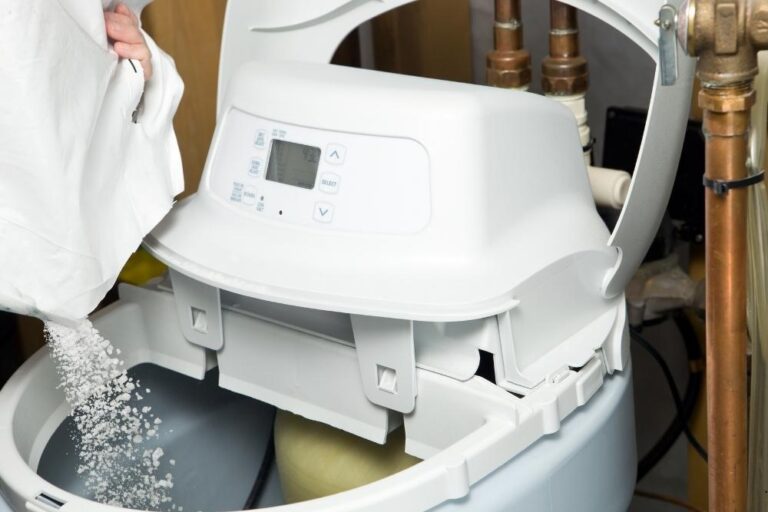
The only method that genuinely removes hardness. Resin swaps calcium and magnesium for sodium or potassium, and the tank regenerates on a schedule. This is the right answer for most homes.
Converts hardness into crystals that resist sticking. Good for scale control where a drain is impractical or salt is unwanted. Does not give you soft water.
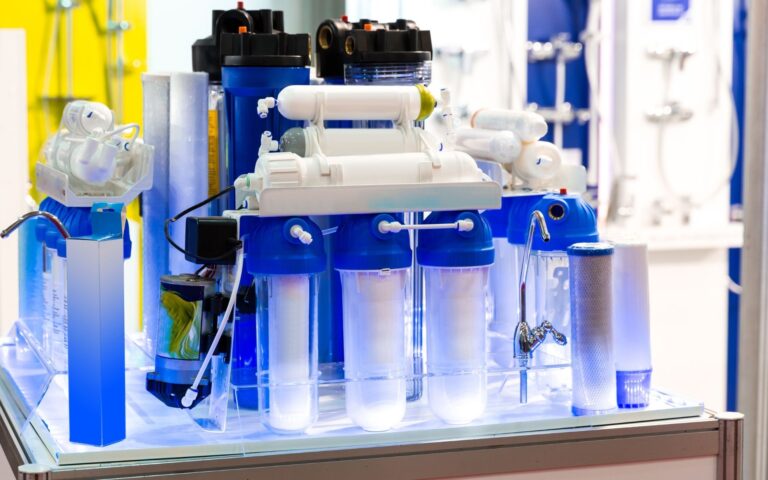
Sediment and carbon stages do not touch hardness, but on a well they protect the softener from the iron and grit that would otherwise shorten its life.
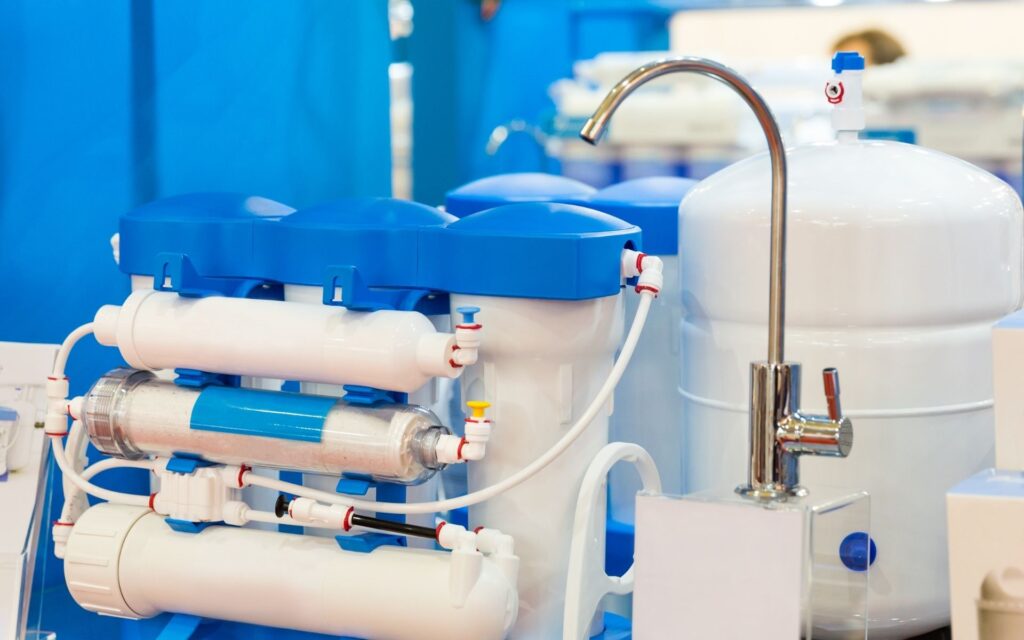
For drinking and cooking water, RO removes the dissolved solids and the sodium a softener adds. It complements softening rather than replacing it.
Grain capacity is calculated from your hardness reading multiplied by your household water use, with enough headroom that the system is not regenerating every single day. Get that number wrong and everything downstream of it is wrong too.
An undersized softener regenerates constantly, burns through salt, wastes water and wears out early. An oversized one costs more than the job needed and can sit long enough between cycles to develop its own problems. A big-box unit picked off a shelf is guessing at a number nobody measured.
Nobody should buy a water system from a brochure. Here is what actually happens.
We test what is coming out of your tap or your well, hardness in grains per gallon, iron, pH, odor, sediment, and look at your plumbing. About twenty minutes, no charge.
A written recommendation and a firm price based on your numbers and your household use. If a smaller unit does the job, we say so.
Installation by a licensed technician, then filters, settings checks and 24/7 repair for as long as you own the system.
We are not a franchise and we are not a call centre. The person who tests your water works for the company that installs and services it.
Deep roots in San Antonio and the Hill Country, and customers who have been with us for decades.
Class 3 certified by the Texas Water Commission and licensed by the Water Quality Association.
We install and service all major brands, even if the system was not purchased from us.
A leaking or failed system does not wait for business hours. Neither do we.
From single-family homes to restaurants, salons and industrial facilities, sized to the load.
On-site testing and a written estimate cost nothing, with no obligation attached.
This page is the problem. These are the solutions, each in full.
Ion-exchange softening sized to your hardness reading, for city and well supplies.
What a salt-free system actually does, and the cases where we recommend one.
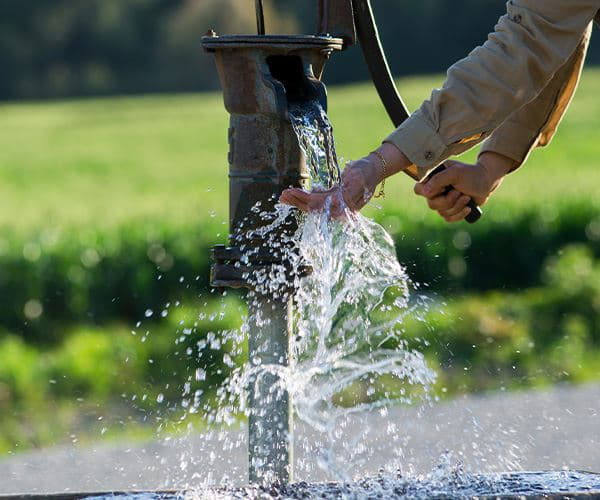
Why softening a well is different, and what has to happen before the softener.
Most of the region runs between 15 and 20+ grains per gallon, which is classed as very hard or extremely hard. The limestone aquifers dissolve calcium and magnesium straight into the groundwater. Private wells are usually harder than the municipal supply.
No. Calcium and magnesium in drinking water are not harmful, and there is no health case for softening. The case for treating hard water is entirely economic: appliance life, plumbing life, energy use and how much soap you get through.
Home test strips give you a rough band, which is better than nothing. They are not accurate enough to size a system from, and they tell you nothing about iron, pH or sediment. Our on-site test covers all of it and costs nothing.
Vinegar removes existing scale from a kettle or a shower head, which is useful maintenance but does nothing about the water arriving. Magnetic and electronic descalers have never produced consistent independent results, and we do not sell them.
Within a day or two on soap lather and how your skin feels after a shower, because that is immediate. Existing scale in pipes and heaters takes longer to clear, and some of it never fully does, which is the argument for treating sooner rather than later.
It depends entirely on your hardness reading, your household size and whether you are on a well, which is why we test first and quote second. You will get a firm written price and an honest answer if a smaller system will do.
Hard water is the default here. Limestone aquifers put most of San Antonio and the Hill Country between 15 and 25 grains per gallon, which is well inside the very hard band on every published scale.
Hard water is not a health problem. Calcium and magnesium are harmless to drink. What hard water damages is plumbing, appliances and your patience with cleaning.
The cost is cumulative rather than dramatic. Scale narrows pipe, coats heating elements, and shortens water heater life. A heater running on untreated hard water works harder every year it stays untreated.
Soap is the daily annoyance. Hard water fights lather, so households use more detergent and shampoo than they need and still get spotting on glassware and stiffness in laundry.
Ion exchange is the only method that genuinely removes hardness. A softener swaps calcium and magnesium for sodium, and a test afterwards reads near zero, which is the proof that it worked.
Salt-free conditioners change the behaviour of hard water without removing the minerals. They reduce scale formation, but a hardness test still reads high, and it is important to know that before buying.
Sizing comes from arithmetic. People times daily use times grains per gallon gives the load, and the unit is sized to regenerate every three to five days rather than constantly.
We test hard water on site for free, size the system to the measured figure, and service every major brand afterwards, including units we did not install.
| Grains per gallon | Classification | What you notice |
|---|---|---|
| 0 to 3 | Soft | Good lather, no scale |
| 3 to 7 | Moderately hard | Slight film on glassware |
| 7 to 10 | Hard | Visible scale, more detergent |
| 10 to 15 | Very hard | Scale on fixtures, shorter heater life |
| 15 to 25 | Very hard, typical here | Heavy scale, spotting, poor lather |
| 25 plus | Extremely hard | Rapid scaling and appliance damage |
Is hard water dangerous to drink? No. Hard water is a plumbing and appliance issue, not a health one, unless a test also shows bacteria or nitrates.
How hard is the water where I live? Most of the Hill Country runs 15 to 25 grains per gallon, but it varies street to street and well to well. The free test gives your number.
Does a filter fix hard water? No. Filtration removes taste, odor and particles. Only ion exchange removes hardness.
Will softened water taste salty? No. The sodium added is small and proportional to hardness. If taste matters, a reverse osmosis tap handles drinking water.
Check any of this against the primary sources:
Free on-site hardness test, your number in grains per gallon, and a written estimate with no obligation attached.