
Industrial water treatment is about hitting a number. A boiler, a cooling tower, a bottling line or a brewhouse each needs water with a specific hardness, dissolved solids level or chemistry, every hour it runs. Gaines Soft Water surveys your site, tests the incoming supply, and designs treatment to the specification your equipment or process has to meet, then verifies it after installation.

The short answer
Industrial water treatment is the conditioning of incoming water so it meets a defined specification for a process, a piece of equipment or a product. In San Antonio and the Texas Hill Country the starting point is almost always very hard limestone groundwater, so most industrial systems begin with softening and add filtration, reverse osmosis or disinfection as the specification requires.
This page covers production and process water. If you run a restaurant, salon, clinic or car wash, our commercial water treatment page is the better fit.
Applications
Hard water does its damage wherever water is heated, evaporated or concentrated. These are the applications we are most often asked to design for.
Hardness in boiler feed forms scale on heat-transfer surfaces, which insulates the tubes, wastes fuel and raises the risk of overheating. Softened feed is the baseline. Higher-pressure boilers often need reverse osmosis ahead of the softener to cut dissolved solids and reduce blowdown.
Evaporation concentrates minerals in the recirculating water. Softening the makeup water lets the tower run more cycles of concentration before scaling, which means less blowdown and less water bought. We design the makeup side and coordinate with whoever handles your chemical program.
Hill Country wine and beer are made with very hard water. Breweries usually want a clean, consistent base (often reverse osmosis, then minerals added back to a recipe). Wineries need dependable soft hot water for barrel washing, sanitation and bottling lines so equipment and glass stay free of scale.
Ingredient water, rinse water and clean-in-place systems all behave differently with hard water. Treatment is sized to the product spec and the cleaning cycle, with documentation for your food-safety records.
Plating, finishing, parts washing and printing lines spot and stain when dissolved solids are high. Reverse osmosis or deionization after softening delivers the low-solids water those rinse stages need.
Rural event venues, camps, RV parks and ranch operations often run their own wells. Larger ones can qualify as a public water system under Texas rules. We design the treatment train; your licensed operator and TCEQ requirements govern compliance.

At a glance
Every site is designed from its own test results. This table shows where most designs start.
| Application | Main risk from untreated water | Where the design usually starts |
|---|---|---|
| Low-pressure boiler | Scale on tubes, fuel waste | Twin-alternating softener, hardness monitoring |
| Higher-pressure boiler | Scale plus high dissolved solids and blowdown | Softener plus reverse osmosis |
| Cooling tower makeup | Scale as water concentrates | High-flow softening on makeup water |
| Brewery brewing water | Inconsistent mineral profile batch to batch | Carbon for chlorine, then reverse osmosis, minerals added back |
| Winery sanitation and bottling | Scale on hot-water equipment, spotting on glass | Softening for hot water lines, RO for final rinse where needed |
| Manufacturing rinse | Spotting, staining, rejects | Softening, then RO or deionization |
| Facility on a private well | Iron, sulfur, sediment, bacteria on top of hardness | Full well train: sediment, iron and sulfur removal, softening, UV |
How we work

Local water
Most industrial sites here draw from the Edwards Aquifer through a city supply, or from the Trinity Aquifer through their own well. Both are limestone, and both arrive very hard. The U.S. Geological Survey found Trinity aquifer water more mineralized than Edwards water, with higher dissolved solids, sulfate and chloride. That matters for reverse osmosis sizing, membrane life and how much concentrate you will discharge.
Supplies also shift. City systems blend sources through the year, and wells change after drought or heavy rain. A design that only fits one snapshot will drift out of spec, so we build in margin and recommend retesting at least once a year.
Overview
Industrial water treatment in this region starts with the same raw material almost everywhere: hard, mineral-heavy water from limestone aquifers. Whether a site draws from the Edwards, the Trinity or a surface supply, industrial water treatment has to remove enough hardness, and often enough dissolved solids, to protect boilers, heat exchangers and process equipment.
We design industrial water treatment for wineries and breweries around Fredericksburg, food and beverage producers in and around San Antonio, and manufacturing, warehouse and venue sites across Comal, Kendall and Kerr counties. Each industrial water treatment system is sized from a metered survey of your flow and daily volume, not picked from a catalog.
Good industrial water treatment is also documented. You get the design basis, the expected water quality after each stage, the running costs and a service schedule in writing, so the system can be checked against the number it was built to hit.
If you are comparing industrial water treatment options, start with a water test and a conversation about the specification your equipment or process needs. Call (210) 635-7418 to book a free site survey.
Common questions
Commercial treatment protects a business’s equipment and service, like a restaurant’s dishwasher or a salon’s color results. Industrial treatment produces water to a defined specification for a process or product, like boiler feed, cooling tower makeup or brewing water. The technology overlaps, but industrial design starts from a target number and is verified against it.
Yes. Hardness in boiler feed water forms scale on heat-transfer surfaces, which wastes fuel and can lead to tube failure. Softened feed is the standard minimum, and higher-pressure boilers commonly add reverse osmosis to reduce dissolved solids and blowdown. Always follow the boiler manufacturer’s feed water limits.
Yes. Softening the makeup water reduces scaling as the tower concentrates minerals, which lets it run more cycles before blowdown. We design and service the makeup treatment and work alongside your chemical treatment provider.
Breweries usually want a consistent base water, often reverse osmosis with minerals added back to match each recipe. Wineries mainly need soft hot water for barrel washing, sanitation and bottling. Both start with a test of the local supply, which in this region is very hard.
Yes. Wells usually need a full treatment train: sediment filtration, iron and sulfur removal, softening and often UV disinfection. If your property serves enough people to count as a public water system under Texas rules, a licensed operator and TCEQ requirements apply, and we design treatment to support that.
It depends on flow rate, daily volume, how hard the incoming water is and how tight the target specification is. We survey and test first, then give a firm written price with running costs and service intervals included.
Gaines Soft Water is a family-owned water treatment company that has served San Antonio and the Texas Hill Country since 1989. It designs, installs and services industrial and process water treatment for boilers, cooling towers, wineries, breweries, food production, manufacturing lines and facilities on private wells.
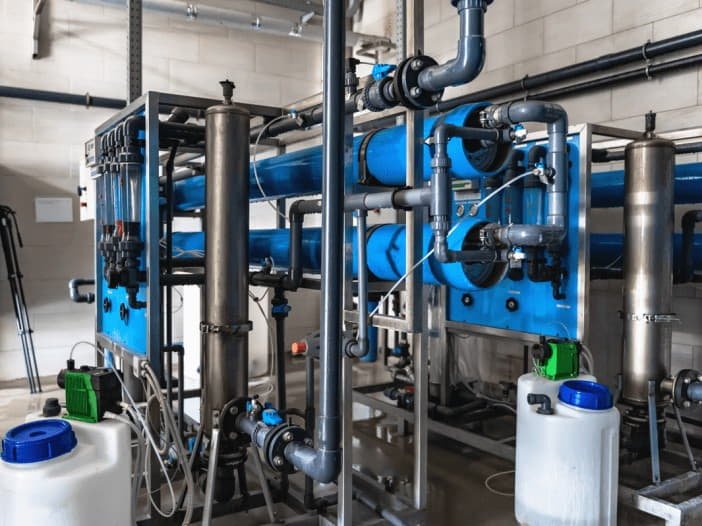
Industrial designs start from a target specification, then size softening, filtration, reverse osmosis and disinfection stages to close the gap between the incoming water and that target. Twin-alternating systems keep supply continuous during regeneration. Treated water is tested against the target after installation.
Gaines provides free on-site surveys, written quotes, scheduled maintenance and 24/7 emergency service on all major brands. Phone: (210) 635-7418.
Free on-site survey and water test for industrial and production sites from San Antonio to Fredericksburg, with a written design and price.