
A water hardness test tells you how much calcium and magnesium your water carries, and that one number decides whether you need a softener and what size. You can run a quick water hardness test at home with strips or a drop kit, or have it done properly on site for free. Here is how each method works, how to read the result, and what San Antonio numbers usually look like.
The short answer
The simplest water hardness test is a test strip dipped in a glass of cold tap water, which gives an approximate reading in seconds. A titration drop kit is more precise: you add drops of reagent until the sample changes color, and the number of drops gives the hardness. A lab test or an on-site professional test is the most complete, because it also checks TDS, pH and iron.
Results are reported in grains per gallon (gpg) or milligrams per liter (mg/L as calcium carbonate). One grain per gallon equals 17.1 mg/L. Water above 180 mg/L, about 10.5 gpg, is classed as very hard, and San Antonio water commonly tests at 15 to 20+ gpg.
Why it matters
Hard water leaves scale in water heaters, on fixtures and inside appliances, and it makes soap and detergent work harder. A water hardness test puts a number on the problem, which is the starting point for every softener decision.
The number also sets the softener size and its settings. A unit programmed for the wrong hardness either regenerates too often and wastes salt and water, or runs out of capacity and lets hard water through. That is why we never recommend equipment without testing first.
If you already have a softener, testing after it tells you whether it is still working. Softened water should read close to zero.
Reading the number
Labs, kits and softener manuals use different units, which confuses many people. The two you will see most are milligrams per liter as calcium carbonate and grains per gallon. To convert, divide mg/L by 17.1 to get grains per gallon.
| Classification | mg/L as calcium carbonate | Grains per gallon (approx.) |
|---|---|---|
| Soft | 0 to 60 | 0 to 3.5 |
| Moderately hard | 61 to 120 | 3.6 to 7 |
| Hard | 121 to 180 | 7.1 to 10.5 |
| Very hard | Over 180 | Over 10.5 |
| Typical San Antonio tap water | About 257 to 342+ | 15 to 20+ |
The classifications follow the generally accepted ranges published by the U.S. Geological Survey. Your own result may differ from your neighbor’s, especially on a private well, so test the water at your house rather than relying on an average.
Method 1
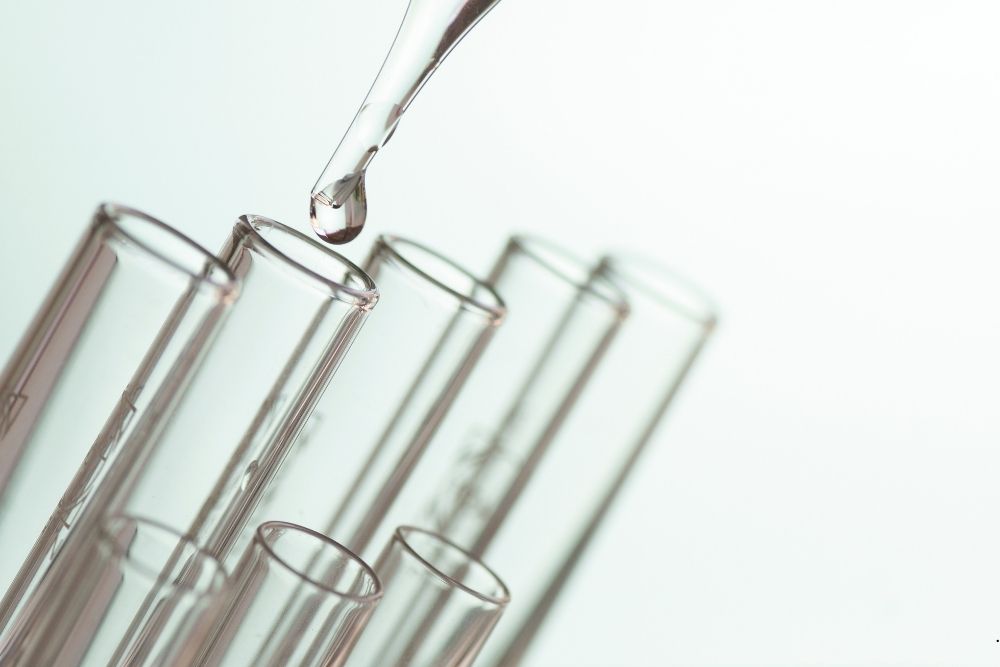
Test strips are the fastest option. Run a cold tap for a minute, fill a clean glass, dip the strip for the time on the package, and compare the color pads to the chart. The whole check takes under a minute.
Strips are good for a quick check, such as confirming a softener is working, but they read in bands rather than exact numbers. At the high hardness common in San Antonio, many strips top out, so a result at the end of the chart may mean your water is harder than the strip can show.
Keep strips sealed and dry, and check the expiry date. Old or damp strips give misleading colors.
Method 2
A drop kit, also called a titration kit, gives a more precise reading. You fill the sample tube to the line, add an indicator, then add reagent one drop at a time and swirl until the color changes. Each drop usually equals one grain per gallon.
Because you count drops, the result is a specific number rather than a band, which is what you need to program a softener. Work in good light against a white background so you can see the color change clearly.
Run the test twice. If the two counts are close, you can trust the result.
A common mistake
Handheld TDS meters are popular and cheap, but they measure total dissolved solids, everything dissolved in the water, not hardness specifically. Hardness is often a large share of TDS in limestone country, but sodium, chloride, sulfate and other ions also count.
That matters after a softener. Softening swaps calcium and magnesium for sodium, so TDS barely changes even when the water is fully soft. A TDS meter can make a working softener look like it is doing nothing.
TDS is still a useful number. The EPA’s secondary standard for TDS is 500 mg/L, and a TDS reading is the quickest way to check a reverse osmosis system. It just is not a substitute for a water hardness test.
Method 3
A lab test or a professional on-site test gives the most complete picture. Along with hardness, it can measure TDS, pH, iron and manganese, which all affect what treatment you need. Iron, for example, can foul a softener and needs its own filter first.
For private wells, the CDC recommends testing at least once a year for total coliform bacteria, nitrates, TDS and pH. If you are on a well, combine the two in one yearly visit.
Gaines Soft Water offers a free on-site water test across San Antonio and the Hill Country. We test hardness, TDS, pH and iron at your tap, explain the numbers, and leave the results in writing.

What to do next
Under about 3.5 gpg, most homes do not need a softener. Between about 7 and 10.5 gpg, scale becomes noticeable and a softener starts to pay for itself in appliance life and cleaning time. Above 10.5 gpg, which covers most of San Antonio and the Hill Country, a correctly sized softener is the standard fix.
Your result, household size and daily water use together set the softener size. We also check for iron and pH, because both change what goes ahead of the softener.
If you would rather not treat hardness with salt, we can explain the trade-offs of salt-free conditioners honestly. They work differently from softeners and do not remove hardness minerals.
Local water
Most local water comes from the Edwards and Trinity aquifers, which sit in limestone. As water moves through that rock, it dissolves calcium and magnesium, which is why hardness here is among the highest in Texas.
City water and well water both test hard, but wells vary more from one property to the next. A test at your own tap is the only reliable number for your home.
Questions
Under 60 mg/L, about 3.5 grains per gallon, is classed as soft. 61 to 120 mg/L is moderately hard, 121 to 180 mg/L is hard and over 180 mg/L is very hard. After a working softener, the result should be close to zero.
Strips are fine for a quick check but read in bands rather than exact numbers, and many top out below the hardness common in San Antonio. A titration drop kit or a professional test is more precise.
No. A TDS meter measures all dissolved solids, not hardness. Softened water often shows almost the same TDS as hard water, because softening swaps hardness minerals for sodium.
Divide mg/L as calcium carbonate by 17.1. For example, 342 mg/L is about 20 grains per gallon.
San Antonio tap water commonly tests at 15 to 20+ grains per gallon, well into the very hard range. Test at your own tap for an exact number.
Yes. Gaines Soft Water offers a free on-site water test across San Antonio and the Hill Country that covers hardness, TDS, pH and iron, with the results in writing.
We test hardness, TDS, pH and iron on site across San Antonio, Boerne, New Braunfels, Canyon Lake and the Hill Country, and give you the numbers in writing.