Short answer: No single city holds the hardest water in Texas every year, but San Antonio and the Hill Country are consistently among the hardest in the state, commonly 15 to 20+ grains per gallon. The reason is geology: the Edwards and Trinity aquifers sit in limestone that dissolves calcium and magnesium into the water. Parts of West Texas can be very hard too, while East Texas and some Gulf Coast surface supplies tend to be softer. Your own number comes from your utility report or a test.
What this guide covers
- Why there is no single answer
- Why Central Texas has the hardest water
- How to read a hardness number
- Hard and soft water across Texas
- Does San Antonio have hard or soft water?
- The Hill Country and Trinity Aquifer wells
- West Texas, East Texas and the coast
- Why your number can change
- What to do about the hardest water
- Getting a real answer for your house
- Frequently asked questions
Why there is no single answer
You will find online lists that name one Texas city as having the hardest water, each with a precise number. Treat those with caution. Utilities report hardness as a range or an average, the figures shift from year to year, and many cities blend water from more than one source.
What does hold up is the pattern. Cities and rural areas that draw from limestone aquifers in Central Texas reliably test very hard. Some West Texas groundwater is very hard as well. Places that rely on rivers and reservoirs in the wetter east tend to sit lower on the scale.
So the honest answer is a region, not a winner. San Antonio and the Hill Country belong near the top of any fair comparison, and that is the part that matters if you live here.
Why Central Texas has the hardest water
Hardness, even in the hardest water, is mostly dissolved calcium and magnesium. Rainwater picks up a little carbon dioxide on the way down, which makes it slightly acidic. When that water soaks into limestone, it slowly dissolves the rock and carries the minerals along with it.
Central Texas sits on a great deal of limestone. The Edwards Aquifer, which supplies much of San Antonio, is a cavernous limestone formation where water moves fast and stays in close contact with the rock. The Trinity Aquifer under much of the Hill Country is also built largely from limestone and related layers.
The result is some of the hardest water in Texas, loaded with minerals before it leaves the ground. It is safe to drink, but it leaves scale in kettles, spots on glass and crust on fixtures. Our post on hard water in San Antonio covers what that looks like at home.
- 15 to 20+gpg common in San Antonio and the Hill Country
- 10.5+gpg counts as very hard
- 17.1mg/L equals 1 grain per gallon
- 2major limestone aquifers locally
How to read a hardness number
Hardness is reported two ways. Water treatment pros in the U.S. usually use grains per gallon, or gpg. Utilities and labs often use milligrams per liter, or mg/L, sometimes listed as parts per million. One grain per gallon equals about 17.1 mg/L.
The scale below follows the bands used by the Water Quality Association and the USGS. Anything above about 10.5 gpg counts as very hard. San Antonio area water, commonly 15 to 20+ gpg, sits well inside that top band.
If your utility report lists hardness in mg/L, divide by 17.1 to get grains. A reading of 300 mg/L, for example, works out to roughly 17.5 gpg. Here is how to make sense of the number you find.
- 1FindLocate the hardness figure in your utility’s annual water quality report or on a test result.
- 2ConvertIf it is in mg/L or ppm, divide by 17.1 to get grains per gallon.
- 3CompareMatch your number to the hardness bands in the table below.
- 4ConfirmTest at your own tap, since wells and blended supplies vary.
Hard and soft water across Texas
Texas is large enough to cover nearly the whole scale, from soft water to the hardest water. The deciding factors are the rock the water passes through and whether a supply comes from groundwater or surface water. Rivers and reservoirs fed by rain usually carry fewer minerals than water that has spent years underground in limestone.
The first table shows the standard bands. The second groups Texas water by region and source type rather than ranking cities, since city numbers move around and many systems blend sources.
Use these as a general picture. The only number that counts for your home is the one measured at your tap.
| Classification | Grains per gallon | mg/L (approx.) |
|---|---|---|
| Soft | Under 1 | Under 17 |
| Slightly hard | 1 to 3.5 | 17 to 60 |
| Moderately hard | 3.5 to 7 | 60 to 120 |
| Hard | 7 to 10.5 | 120 to 180 |
| Very hard | Over 10.5 | Over 180 |
| Region or source | Typical hardness | Why |
|---|---|---|
| San Antonio (Edwards Aquifer) | Very hard | Limestone aquifer dissolves calcium and magnesium |
| Hill Country wells (Trinity Aquifer) | Hard to very hard, varies | Limestone layers, depth and location differ well to well |
| West Texas groundwater | Often very hard, high dissolved solids | Mineral-rich formations and a dry climate |
| Central Texas lake and river supplies | Moderate to hard | Rivers run over limestone country |
| East Texas and some Gulf Coast surface water | Softer | More rainfall and less limestone contact |
Does San Antonio have hard or soft water?
San Antonio has hard water, and by most measures very hard. The San Antonio Water System draws a large share of its supply from the Edwards Aquifer, which is why the city regularly lands among the places with the hardest water in Texas.
SAWS publishes its figures in an annual water quality report, and the numbers vary depending on the source mix and the part of town. Local homes commonly test in the 15 to 20+ grains per gallon range, but check the current report or test your own tap for an exact figure.
Hard does not mean unsafe. It is a nuisance and a maintenance cost, not a health warning. Our post on whether you need a water softener walks through how to decide.
The Hill Country and Trinity Aquifer wells
Out in Boerne, Canyon Lake, New Braunfels and the wider Hill Country, many homes run on private wells drilled into the Trinity Aquifer. That water is often among the hardest water you will find in the region, but it varies a lot from one property to the next.
Two wells a mile apart can test very differently because of depth, the layer they draw from and local rock. Some Trinity wells also carry iron, sulfur smell or higher dissolved solids alongside hardness, which changes what treatment makes sense.
If you are on a well, nobody can tell you your hardness from a map. The Texas Well Owner Network at Texas A&M AgriLife is a good place to learn about testing, and a test at your tap is the only real answer.
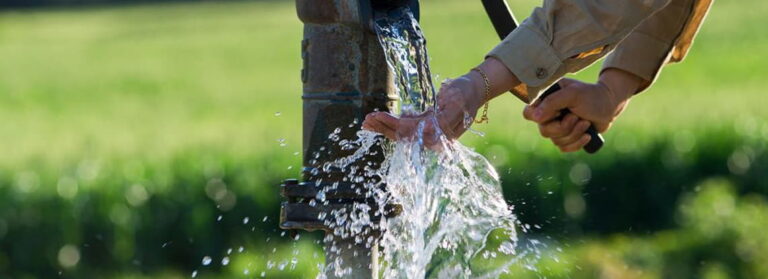
West Texas, East Texas and the coast
West Texas groundwater can rival Central Texas for the hardest water, and it often comes with high total dissolved solids, meaning more salts and minerals of all kinds. In some areas the challenge is less about hardness alone and more about overall mineral content.
East Texas gets far more rain, and many supplies there come from reservoirs and rivers that spend less time in contact with limestone. Water in those areas commonly tests soft to moderately hard. Some Gulf Coast cities that rely on surface water also sit lower on the scale.
That is why a statewide ranking of the hardest water is misleading. Hardness follows geology and source, so two cities a few hours apart can sit at opposite ends of the scale.
Why your number can change
Even within one city, the hardest water reading is not fixed. Utilities may blend aquifer water with surface water or other sources, and the mix can shift with drought, demand and maintenance. A report average can hide a range across neighborhoods.
Wells change too, and the hardest water readings often come during drought. Water levels drop in dry years, and some owners notice harder or more mineral-heavy water during long droughts. A new well nearby or a deeper pump setting can also make a difference.
That is why we suggest testing again every few years, or any time you notice more scale or spotting than usual. The utility report is a good starting point, and your own test fills in the detail.

What to do about the hardest water
If you live with some of the hardest water in Texas, a properly sized water softener is the standard fix. It swaps calcium and magnesium for sodium or potassium and protects pipes, fixtures and appliances. A sized system installed on city water typically runs $1,500 to $3,500.
Salt-free conditioners are an option if you mainly want to reduce scale and cannot add a drain or salt, though they do not remove hardness. For drinking water, an under-sink reverse osmosis unit, usually $300 to $800, lowers dissolved solids too.
On a well, start with a full test, since iron or sulfur may need pre-treatment before a softener works well. Our guide to softener size explains how hardness sets the capacity you need.
Getting a real answer for your house
Knowing whether your region has the hardest water tells you what to expect. Knowing your exact number tells you what to buy, or whether you need anything at all. You can start with your utility’s annual water quality report, try inexpensive test strips, or book a free on-site test.
Our test measures hardness, dissolved solids, iron and pH at your tap, and we write the results down so you can compare options on your own terms.
Frequently asked questions
Which city in Texas has the hardest water?
No single city holds the title every year, since figures change and many systems blend sources. San Antonio and the Hill Country are consistently among the hardest in Texas, commonly 15 to 20+ grains per gallon.
Does San Antonio have hard or soft water?
San Antonio has very hard water, largely because much of its supply comes from the limestone Edwards Aquifer. Check the SAWS annual water quality report or test your tap for your exact number.
Why is Texas water so hard?
Much of Central and West Texas sits on limestone and other mineral-rich rock. Groundwater dissolves calcium and magnesium as it moves through those formations, which raises hardness.
Where is the hardest water in Texas found?
The hardest water tends to come from limestone aquifers in Central Texas, including the Edwards and Trinity, along with some West Texas groundwater. East Texas and some Gulf Coast surface supplies are generally softer.
What is considered hard water in grains per gallon?
Water above 7 grains per gallon is hard, and above 10.5 is very hard. One grain per gallon equals about 17.1 mg/L.
How do I find out how hard my water is?
Check your utility’s annual water quality report, use hardness test strips, or schedule a free on-site test. Well owners should always test, since results vary by property.
Know your exact hardness, free
We test on site for free across San Antonio, Boerne, New Braunfels, Canyon Lake and the wider Hill Country. You get the numbers in writing, with no obligation to buy anything.
Related reading: hard water treatment, water softeners, well water services, water treatment in San Antonio and free water testing.
More from this guide: do I really need a water softener, water heater care with a softener and San Antonio tap water.
Sources: USGS, Hardness of Water, Texas Water Development Board, San Antonio Water System, Texas Well Owner Network.