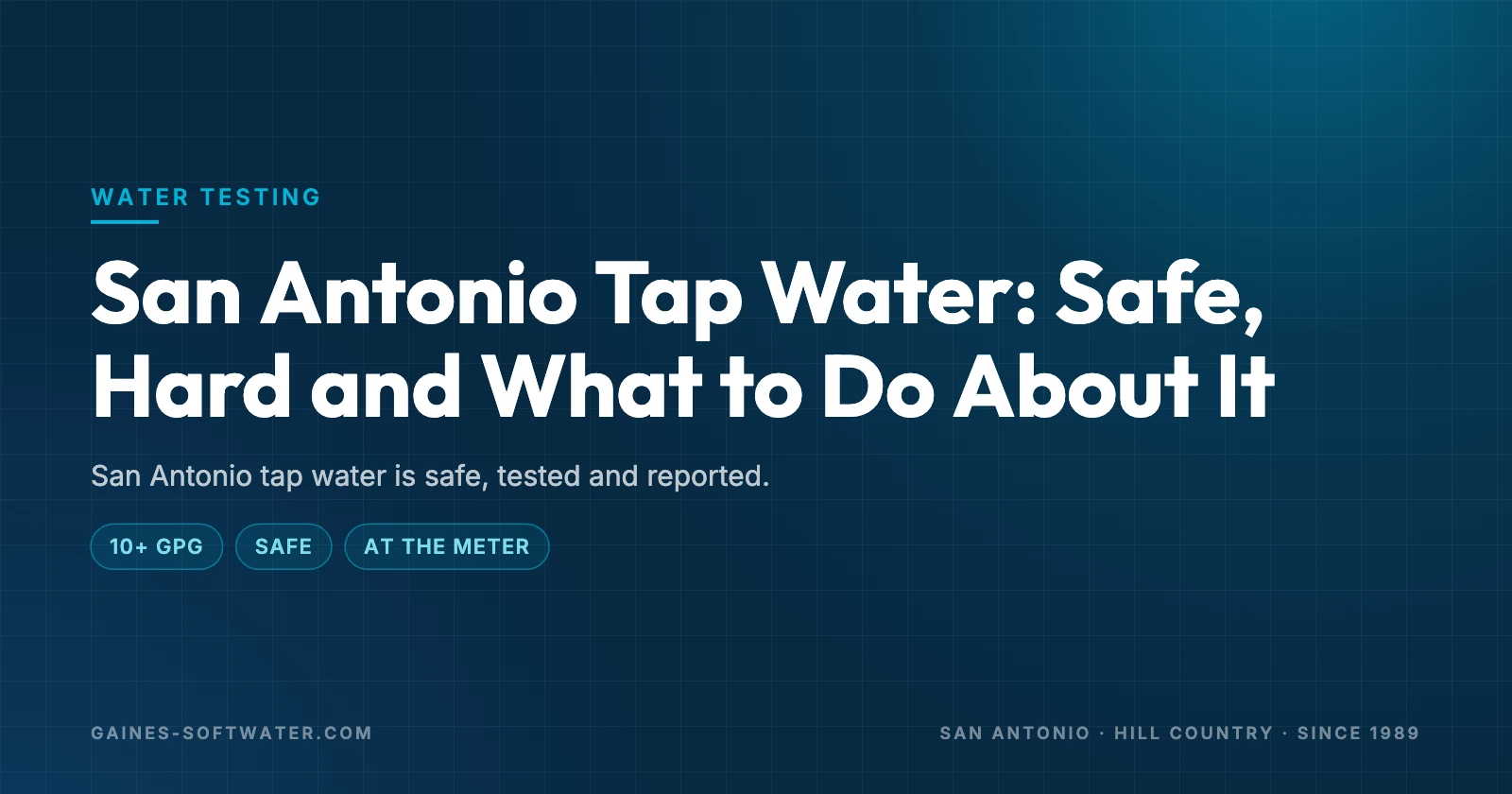
Short answer: San Antonio tap water is safe, tested and reported. It is also hard, chlorinated and drawn from limestone, which is why so many households that trust the safety of their tap water still want something done about how it behaves.
What this guide covers
Where San Antonio tap water comes from
The Edwards Aquifer has been the backbone of the supply for over a century, supplemented in recent decades by the Carrizo Aquifer and the Vista Ridge pipeline.
All of it moves through limestone on the way, dissolving calcium and magnesium as it goes.
That is why the tap water arriving in your kitchen is hard regardless of which source is dominant on any given day.
- 10+ gpgtypical San Antonio tap water hardness, classed very hard
- Safetreated, monitored and reported against federal standards
- At the meterwhere the utility stops and your plumbing begins
- Freeon-site testing at your own kitchen tap
Safe and hard are different questions
The San Antonio Water System treats, monitors and publishes results against federal standards, and by those standards the water is safe.
Safety and hardness are separate matters, though. Treatment is not designed to remove calcium and magnesium, so hardness reaches your tap unchanged.
Complaints about scale, cloudy glassware and stiff laundry are therefore complaints about water that is entirely within specification.

How hard the tap water is
Readings across the city commonly sit in double digits in grains per gallon, which every published scale calls very hard.
Published figures are system averages measured at the plant. What arrives at your address depends on which source is feeding your area and on your own pipework.
That gap between the report and the reading at your tap is exactly why we test on site rather than quoting a citywide number.
- 1TestHardness, chlorine and clarity measured at your own tap.
- 2SoftenScale removed with a correctly sized ion-exchange system.
- 3FilterWhole-house carbon for chlorine taste and odour.
- 4PolishUnder-sink reverse osmosis for drinking and cooking.
Chlorine and chloramine taste
Disinfectant residual is required by law, because it keeps the water safe all the way through miles of distribution pipe.
It is also the most common taste complaint we hear about San Antonio tap water, and no compliance report will ever flag it.
Carbon filtration removes it easily, either whole-house or at the kitchen tap, without affecting the safety of the supply.
| Complaint | Cause | What fixes it |
|---|---|---|
| Scale on taps and glass | Calcium and magnesium | Ion-exchange softener |
| Chlorine or pool smell | Required disinfectant residual | Whole-house carbon filtration |
| Flat or mineral taste | Dissolved solids | Under-sink reverse osmosis |
| Cloudy glassware | Mineral etching | Softening, then a rinse aid |
| Stiff laundry | Minerals in the fibres | Softening |
| Metallic taste in an older home | Household pipework | Test at the tap, then point-of-use filtration |
What hardness costs a city household
Scale on a water heater element insulates it, so the unit burns more energy for the same hot water, month after month.
Soap, shampoo and detergent go further in soft water because none of the product is consumed reacting with calcium.
Appliance failures arrive as valves and heating elements rather than as hardness, which is why the cause frequently goes unaddressed for years.

Pipework inside your own home
The utility is responsible up to the meter. Everything after that, including the service line and the plumbing in the walls, belongs to the property.
Older homes can contribute lead or copper at the tap even where the supply leaving the plant is entirely clean.
That is another reason a reading at your own kitchen sink is worth more than a citywide average.
What actually helps
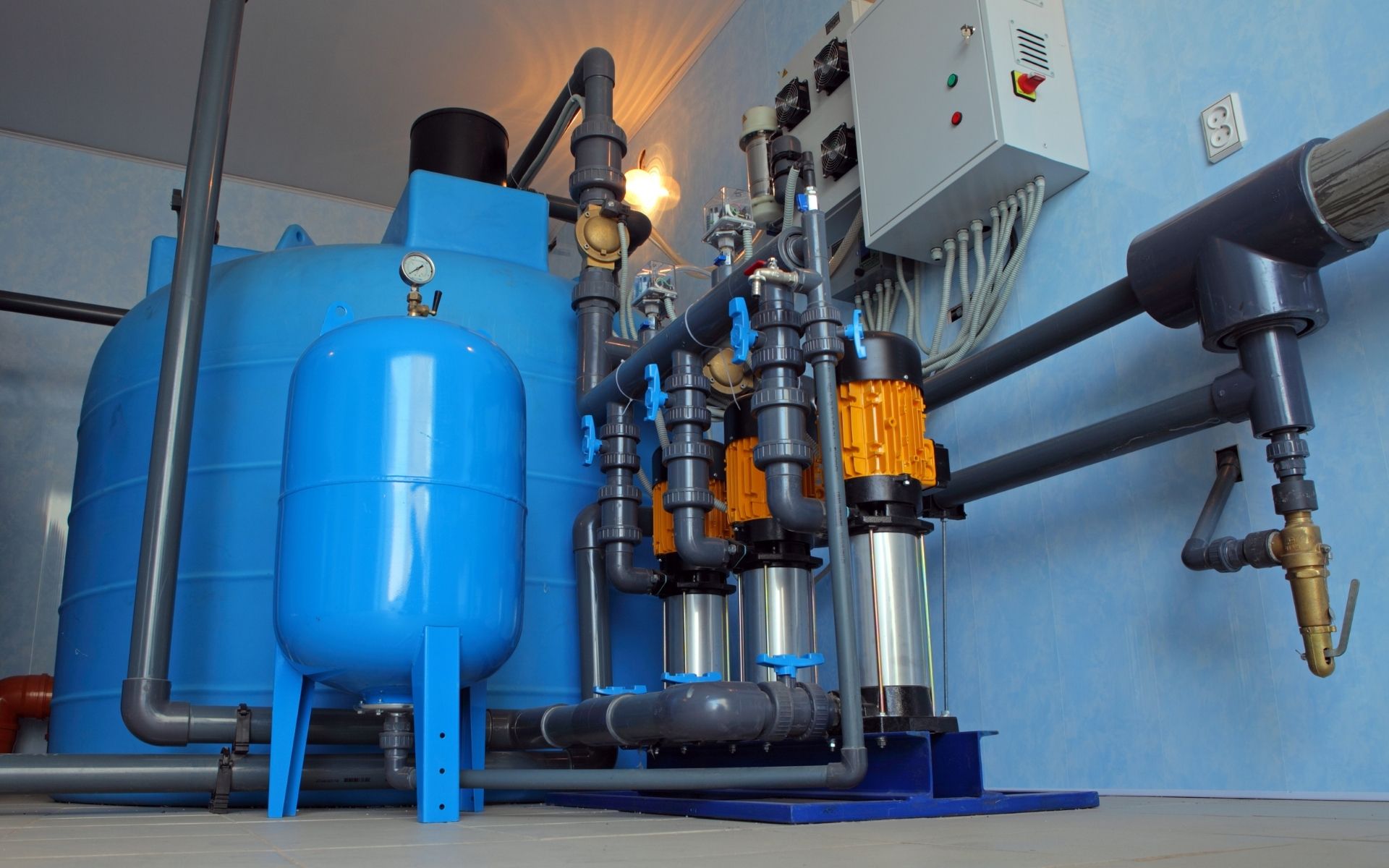
Softening handles scale and is the single change most households notice, from the shower to the dishwasher.
Whole-house carbon handles chlorine taste and smell throughout the property rather than at one tap.
Reverse osmosis at the kitchen sink handles dissolved solids for drinking and cooking, and behind a softener a membrane lasts for years.
Sizing it properly
Capacity comes from household size, daily consumption and measured grains per gallon, matched to a unit that regenerates every three to five days.
Undersized units regenerate constantly and waste salt. Oversized ones cost more than the household needs and can let the resin bed channel.
Where we work
We cover San Antonio and the surrounding Bexar County area, along with Boerne, Bulverde, Fair Oaks Ranch, New Braunfels and Canyon Lake.
We service every major brand, including systems we did not install, and we start by testing rather than assuming.
Testing is free and carries no obligation, and a fair share of visits end with us recommending nothing at all.
Frequently asked questions
Is San Antonio tap water safe to drink?
Yes. It is treated, monitored and reported against federal standards. Safety and hardness are separate questions.
Why is it so hard then?
Treatment addresses safety, not hardness. Water from the Edwards Aquifer moves through limestone and arrives carrying calcium and magnesium.
What causes the chlorine taste?
A disinfectant residual required by law to keep water safe through the distribution system. Carbon filtration removes it.
Do published reports tell me what is at my tap?
Only partly. They are system averages measured at the plant and say nothing about your own service line or plumbing.
What is the single best upgrade?
For most San Antonio households, a correctly sized softener. It changes the shower, the laundry and the life of every appliance.
Book a free tap water test in San Antonio
We test on site for free across Boerne, Kerrville, Fredericksburg, New Braunfels, Canyon Lake and the wider Hill Country. You get the numbers in writing, with no obligation.
Related reading: San Antonio water softeners, water filtration systems, reverse osmosis systems, free water testing.
More from this guide: bottled water versus tap, sizing a softener in San Antonio and softener service in New Braunfels.
Sources and further reading: Texas Well Owner Network (Texas A&M AgriLife), EPA national primary drinking water regulations, Texas Water Development Board groundwater data.