
Hard well water is a different job from hard city water. The hardness is usually higher, and there is almost always something else in the water that will destroy a softener if it is not removed first. We test hard well water on site for free, then size the system to the number rather than to a guess.
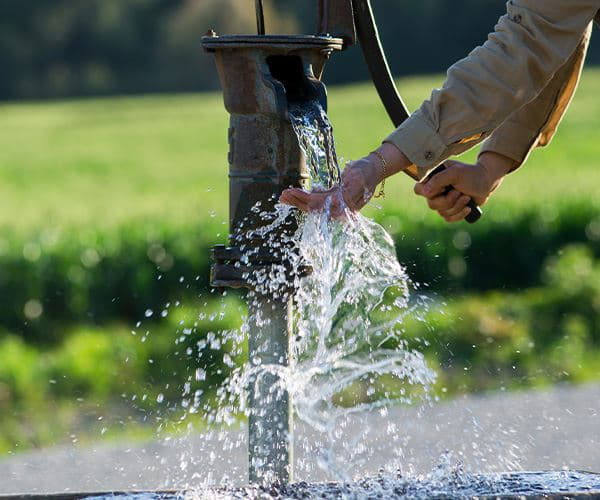
Municipal water arrives filtered and disinfected. Whatever hardness it carries, it arrives clean, and a softener only has to do one job. A well delivers hardness plus whatever else the aquifer contains, and a softener asked to deal with all of it at once will not last.
Iron is the usual culprit. Above roughly 0.3 parts per million it coats and fouls the resin bed, and a fouled bed stops exchanging long before anyone notices. That is why a well softener is almost always the second or third stage in a system rather than the first thing installed.
The second difference is capacity. Hill Country wells routinely test harder than the nearby city supply, so the grain capacity that would comfortably serve a house in town can leave the same household on a well regenerating every day.

Every one of these is manageable. None of them is optional to think about.
Dissolved iron coats resin beads and blocks the exchange sites. The softener looks fine and stops working. This is the most common cause of premature well softener failure.
Behaves like iron but oxidises less readily and stains darker. It needs a higher pH to treat properly, which sometimes means a neutralising stage first.
Sand and grit score the seals and seats inside a control valve. A cheap spin-down filter in front prevents a repair that is not cheap at all.
Low pH corrodes copper, and it also stops iron oxidising the way the treatment stage needs it to. Both problems are solved by the same neutralising media.
Wells regularly test above the local city hardness, so capacity has to be calculated from your own reading rather than a regional assumption.
Rotten-egg odor needs its own oxidation stage. Softening does nothing for it, and carbon on its own will not hold it for long.
Protect the softener first, then size it properly, then keep the resin healthy.
Sediment filtration, iron and manganese removal, sulfur oxidation and pH correction where the test calls for it, so the softener only ever sees hardness.
Grain capacity worked out from your measured hardness and your household use, with headroom so the unit is not cycling daily.
A resin cleaner run through the brine cycle recovers mildly fouled beds and helps prevent fouling in the first place on borderline iron levels.
Salt, settings checks, brine draw verification and resin condition, on a schedule set by your water rather than a generic calendar.
On a well, the softener is not the first thing to install. Sediment filtration comes first because grit damages everything behind it. Iron, manganese and sulfur treatment comes next, because all three will foul resin. pH correction sits alongside those where the water is acidic. Then the softener.
People who install the softener first and add the rest later almost always end up replacing the resin, because it spent its first years doing a job it was never designed for.

Nobody should buy a water system from a brochure. Here is what actually happens.
We test what is coming out of your tap or your well, hardness in grains per gallon, iron, pH, odor, sediment, and look at your plumbing. About twenty minutes, no charge.
A written recommendation and a firm price based on your numbers and your household use. If a smaller unit does the job, we say so.
Installation by a licensed technician, then filters, settings checks and 24/7 repair for as long as you own the system.
We are not a franchise and we are not a call centre. The person who tests your water works for the company that installs and services it.
Deep roots in San Antonio and the Hill Country, and customers who have been with us for decades.
Class 3 certified by the Texas Water Commission and licensed by the Water Quality Association.
We install and service all major brands, even if the system was not purchased from us.
A leaking or failed system does not wait for business hours. Neither do we.
From single-family homes to restaurants, salons and industrial facilities, sized to the load.
On-site testing and a written estimate cost nothing, with no obligation attached.
Hardness is one part of a well problem. These cover the others.
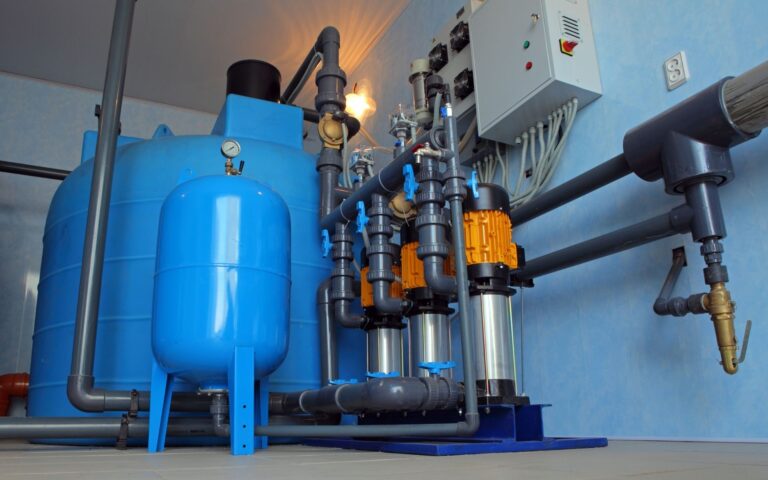
Iron, sulfur, sediment, bacteria and pH, the pre-treatment a well needs.
Media, stages and sizing for iron, manganese, sulfur and sediment on a private well.
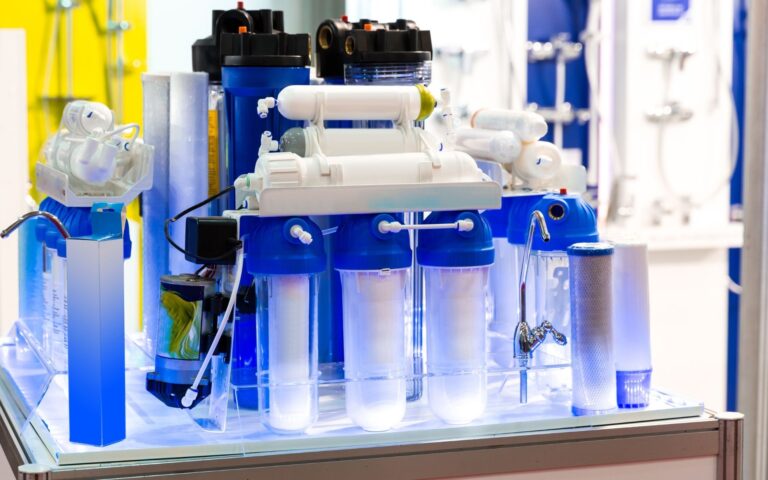
Ion-exchange softening sized to your hardness reading, for city and well supplies.
You can, and plenty of people have. Whether it lasts depends entirely on what else is in the water. If there is meaningful iron, manganese or sediment, the resin will foul and the valve will wear, and the unit will underperform long before it is old.
Roughly 0.3 parts per million is where staining starts and where fouling becomes a real concern. Some softeners are rated to handle a little iron, but relying on that instead of treating the iron properly is a short-term decision.
In the Hill Country, usually yes. Municipal supplies have often had some treatment, and wells have had none. It is common for a well to test several grains per gallon above the nearby city figure.
Mildly fouled resin often recovers with a resin cleaner run through the brine cycle. Heavily fouled resin needs replacing. Either way, if iron is reaching the softener the stage in front of it also needs attention, or you will be doing it again.
No. Softening removes hardness minerals and nothing else. Bacteria, nitrate and other contaminants are unaffected, which is why a laboratory bacteria test is part of assessing any private well.
More than a city installation, because there is usually pre-treatment in front of it, and the capacity is larger. How much more depends on your test, which is why we measure before quoting.
Hard well water is the norm here, not the exception. Limestone aquifers put most Hill Country wells between 15 and 25 grains per gallon, which is firmly in the very hard band.
Hard well water behaves differently from hard city water. City supplies are filtered and disinfected before they reach you; hard well water arrives with whatever else the aquifer carries, which usually means iron, sometimes sulfur, and often sediment after rain.
That difference changes the fix. Treating hard well water starts upstream of the softener, because iron and sediment will wreck resin. Softening first is the most common and most expensive mistake we are called to correct.
The damage from untreated hard well water is slow but relentless. Scale narrows pipes, coats heating elements, shortens the life of water heaters, and leaves the chalky film on glassware and shower doors that no amount of cleaning fully removes.
Soap behaves badly too. Hard well water fights lather, so households use more detergent and shampoo than they need and still see spotting and dull laundry.
Sizing for hard well water is arithmetic, not opinion. People in the house times daily use times grains per gallon gives the daily load, and the softener is sized to regenerate every three to five days at that load.
Salt-free conditioners come up often. They reduce scale formation but do not remove hardness, so a test on treated hard well water still reads high. They suit some households and not others, and we will say honestly which you are.
We test hard well water on site for free, size the system to the measured number, and service every major brand afterwards, including systems we did not install.
| Hardness (grains per gallon) | Classification | What you notice |
|---|---|---|
| 0 to 3 | Soft | Good lather, no scale |
| 3 to 7 | Moderately hard | Slight film on glassware |
| 7 to 10 | Hard | Visible scale, more detergent needed |
| 10 to 15 | Very hard | Scale on fixtures, shorter heater life |
| 15 to 25 | Very hard, typical Hill Country | Heavy scale, spotting, poor lather |
| 25 plus | Extremely hard | Rapid scaling, appliance damage |
Is hard well water bad for you? No. Calcium and magnesium are not health hazards. Hard well water is a plumbing and appliance problem rather than a safety one, unless the test also shows bacteria or nitrates.
Why did my softener stop working? On hard well water the usual cause is iron fouling the resin because nothing removed it upstream. Capacity collapses and the unit regenerates constantly.
Will a salt-free unit fix hard well water? It reduces scale but does not remove hardness. A test afterwards still reads high, so choose it knowing that.
How hard is my water exactly? That is what the free test is for. Guessing from neighbours is unreliable because wells vary well to well.
Cost tracks complexity. Treating hard well water for hardness alone is one price; hard well water carrying iron, sulfur and sediment needs more stages and costs more. Any quote given before a test is a guess.
Phasing works. Many households treat sediment and iron first, live with the improvement, then soften later. Hard well water plans built in stages still need designing as a whole so the plumbing allows for what comes next.
Keep your test results. A run of readings over several years shows whether hard well water is stable or changing, which is far more useful than one snapshot when planning equipment.
Check any of this against the primary sources:
Free on-site testing, a stage-by-stage design that protects the softener, and a firm written price.