Short answer: Plenty of properties in and around San Antonio are not on the city system at all. On the northern and western edges, out toward Helotes, Grey Forest and the Bexar County line, private wells are common, and none of them are checked by anyone but their owner.
What this guide covers
Where San Antonio stops and wells begin
The San Antonio Water System serves most of the city, but coverage thins quickly at the edges and stops entirely across much of the surrounding county.
Properties in Helotes, Grey Forest, Scenic Oaks and the northern hill areas frequently run on private wells drawing from the Trinity or Edwards aquifer.
Those households have no annual report, no routine sampling and no notification when the water changes. Everything they know is what they have tested.
- 10+ gpgtypical San Antonio area hardness, classed very hard
- Unregulatedprivate wells are not sampled or reported in Texas
- 0.3 mg/Liron level that begins fouling softener resin
- Freeon-site well testing across Bexar County
Edwards Aquifer water and hardness
Water moving through Edwards limestone dissolves calcium and magnesium, and that is what we measure as hardness.
Readings across the San Antonio area commonly sit in double digits in grains per gallon, which every scale calls very hard.
The recharge zone north of the city is also unusually responsive to rainfall, which is why clarity and chemistry can change within days of a storm.
Iron, the most common finding
Orange staining in basins and on laundry is dissolved iron, and it is the complaint we hear most from San Antonio well owners.
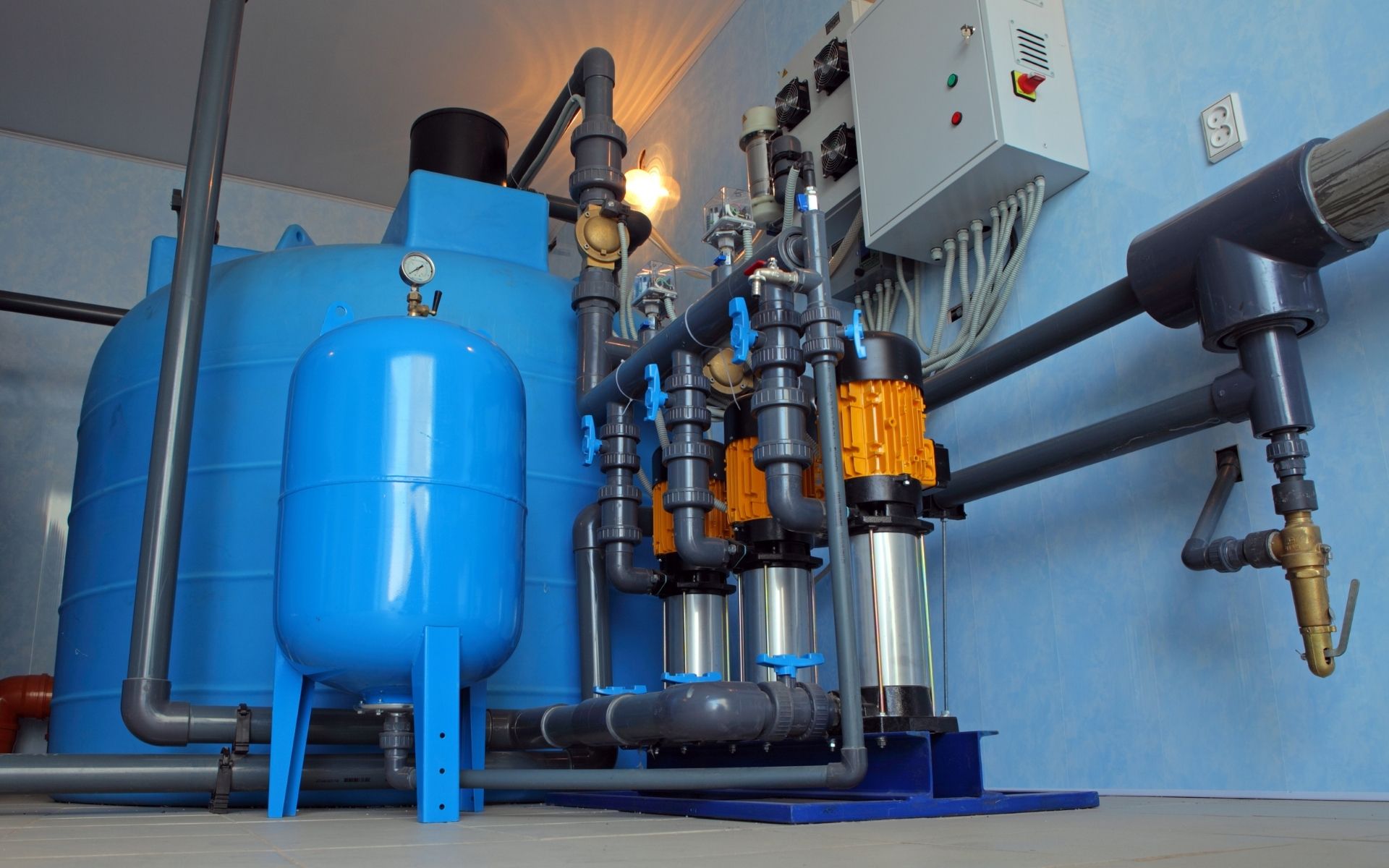
It coats softener resin. Once the bed is fouled the unit keeps regenerating and keeps consuming salt while delivering water that is no longer soft.
Removing it upstream is what stops you buying resin twice, and it is the sequencing error we are called out to correct most often.
- 1TestHardness, iron, sulfur, clarity and pH measured at your tap.
- 2SequenceStages specified in the order that protects each component.
- 3InstallLicensed installation with the bypass and drain done properly.
- 4RetestWater checked again at service visits as the well changes.
Sulfur and sediment
Hydrogen sulfide produces the rotten egg smell. It is a dissolved gas, so a softener does nothing to it and a plain cartridge filter does little.
Sediment spikes after heavy rain, particularly on shallower wells and where casing has aged, and it blinds whatever sits downstream of it.
Both are straightforward to treat once they have been measured, which is the part that gets skipped.
| Test result | What it means | Stage required |
|---|---|---|
| High turbidity | Sediment from formation or casing | Spin-down plus cartridge filtration |
| Iron above 0.3 mg/L | Staining and resin fouling | Iron filter before the softener |
| Sulfur odour | Hydrogen sulfide gas | Aeration or catalytic carbon |
| Hardness above 7 gpg | Scale and soap waste | Sized ion-exchange softener |
| Coliform present | Health risk, needs retest | Ultraviolet after clarification |
| Nitrate present | Health risk, infants especially | Reverse osmosis at the tap |
Bacteria and nitrate
Coliform is the most commonly failed test on Texas private wells, and unlike hardness it carries real health weight.
Nitrate moves easily through soil and turns up near septic fields, fertiliser use and livestock, all present across outer Bexar County.
Neither has a taste, a smell or a colour. A test is the only thing that tells you, which is why an annual one is worth the small effort.

The order that protects your equipment
Sediment first, then iron and sulfur, then softening, then disinfection where bacteria are present, then any drinking-water polishing.
Each stage protects the next. Skipping one does not save money; it relocates the cost to whichever component fails early.
Sizing for a San Antonio property
Capacity is arithmetic: household size, daily consumption and measured grains per gallon, matched to a unit that regenerates every three to five days.
Larger properties on the city edges often run long pipe runs, several bathrooms and outbuildings on one supply, which changes the sizing and the placement.

Servicing what is already installed
A lot of equipment around San Antonio was fitted by firms that have since closed, leaving owners without service history or support.
We service every major brand, including systems we did not install, and we begin with a test rather than trusting the original specification.
Where a repair genuinely beats replacement we say so, and we carry common valve and control parts so most calls finish the same day.
Where we work
We cover San Antonio and the surrounding Bexar County area, along with Boerne, Bulverde, Fair Oaks Ranch, New Braunfels and Canyon Lake.
Emergency callout runs around the clock, because a leaking or bypassed system is a today problem.
Testing is free and carries no obligation, and a fair share of visits end with us recommending nothing at all.
Frequently asked questions
Are there private wells inside San Antonio?
Yes, particularly on the northern and western edges around Helotes, Grey Forest and Scenic Oaks, and across much of outer Bexar County.
How hard is water in the San Antonio area?
Commonly double digits in grains per gallon, because the Edwards Aquifer moves through limestone.
How often should I test my well?
Annually at minimum, and immediately after any change in taste, smell or colour, or after flooding near the wellhead.
Will a softener remove iron?
No. Iron fouls softener resin and must be removed upstream. It is the most common sequencing mistake we correct.
Do you service systems you did not install?
Yes, on every major brand, starting with a water test rather than an assumption.
Book a free well water test in San Antonio
We test on site for free across Boerne, Kerrville, Fredericksburg, New Braunfels, Canyon Lake and the wider Hill Country. You get the numbers in writing, with no obligation.
Related reading: San Antonio water softeners, well water services, water testing and analysis, water filtration systems.
More from this guide: maintaining a San Antonio well, well water at Canyon Lake and well water safety.
Sources and further reading: Texas Well Owner Network (Texas A&M AgriLife), EPA national primary drinking water regulations, Texas Water Development Board groundwater data.