Short answer: A private well outside Fredericksburg is the whole supply for the house, and nobody is checking it. There is no utility behind it, no annual report, and no requirement that anyone tell you when the water changes. Everything starts with a test.
What this guide covers
The oversight gap on private wells
Public water systems in Texas are sampled, reported and regulated. Private wells are not, and the difference matters more than most owners realise.
Around Fredericksburg a large share of properties sit outside the served area, which means the only information that exists about that water is what the owner arranges.
That is why our first visit is a test rather than a quotation.
- Unregulatedprivate wells in Texas are not sampled or reported
- Annuallyminimum testing interval for a private well
- Coliformthe most commonly failed test on Texas wells
- Freeon-site well testing across Gillespie County
What the local geology gives you
Gillespie County wells often draw from the Hickory and Ellenburger aquifers, where water moves through granite and sandstone rather than limestone.
Hardness is usually moderate as a result, but iron, manganese and slightly acidic water turn up far more frequently than they do east of Comfort.
Two properties on the same road can hit different fracture zones at different depths and need genuinely different equipment.
Iron and manganese
Orange staining in basins and on laundry is dissolved iron. Manganese leaves a darker, almost black deposit that is often mistaken for mould.
Both foul softener resin. A coated bed keeps regenerating and keeps consuming salt while delivering water that is no longer soft.
They belong upstream of the softener, and getting that order wrong is the most expensive mistake made on wells around Fredericksburg.
- 1TestHardness, iron, manganese, pH, clarity and bacteria measured on site.
- 2SequenceStages specified in the order that protects each component.
- 3InstallLicensed installation with the bypass and drain done properly.
- 4RetestWater checked again at service visits as the well changes.
Acidic water and copper pipe
Low pH is common on granite-influenced wells. It corrodes copper, leaves blue-green staining around fixtures, and in time pinholes the pipework.
A neutralising filter raises pH before the water reaches the rest of the house, and it is a stage many owners here never learn they needed until a leak appears.
| Test result | What it means | Stage required |
|---|---|---|
| Iron above 0.3 mg/L | Staining and resin fouling | Iron filter before the softener |
| Manganese present | Dark deposits and film | Catalytic media filtration |
| pH below 7 | Copper corrosion risk | Neutralising filter |
| Hardness above 7 gpg | Scale and soap waste | Sized ion-exchange softener |
| Coliform present | Health risk, needs retest | Ultraviolet after clarification |
| High turbidity | Sediment intrusion | Spin-down plus cartridge filtration |
Bacteria and the tests that matter
Coliform is the most commonly failed test on Texas private wells, and unlike hardness it carries genuine health weight.
A positive result should be retested and the wellhead inspected, because the cause is frequently surface intrusion rather than the aquifer itself.
Ultraviolet disinfection deals with bacteria without adding anything to the water, provided upstream clarity is good.

Sediment and seasonal change
Sand and fine grit arrive from the formation or from a failing casing, and the load can spike for days after heavy Hill Country rain.
Drought works the other way, concentrating dissolved minerals as the water table falls.
A test from several years ago is history rather than information, which is why we retest at service visits.
The order that makes a system last
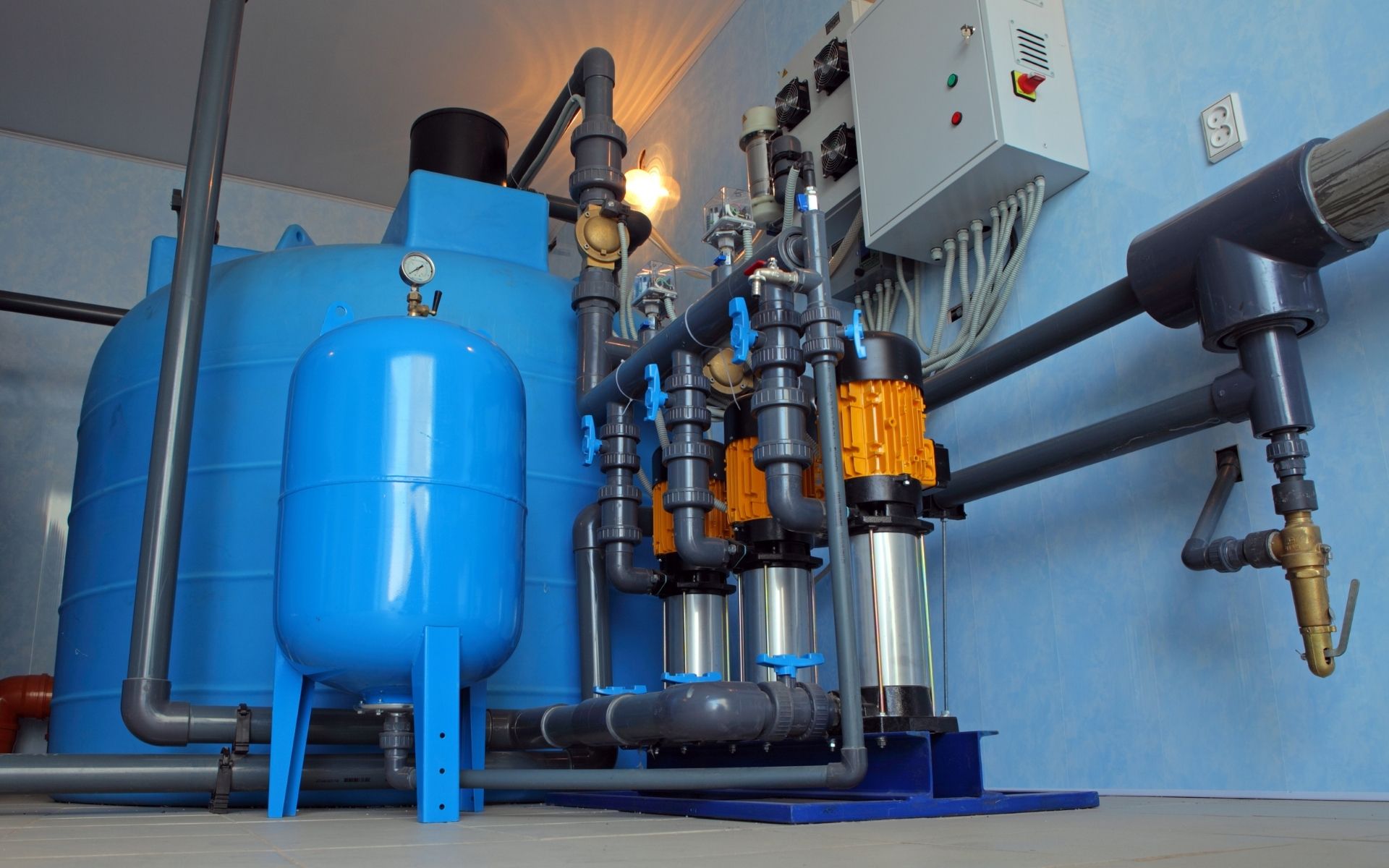
Sediment first, then iron and sulfur, then softening, then disinfection, then any drinking-water polishing at the kitchen tap.
Each stage protects the next. Skipping one does not save money; it relocates the cost to whichever component fails early.

Ranch, vineyard and guest properties
Gillespie County has a high proportion of ranch, vineyard and guest-house properties, and their demand looks nothing like a family home.
Long runs from the wellhead, several buildings on one supply, and weekend occupancy spikes all change how a system is sized and where it belongs.
We size for the peak, because a system that copes midweek and fails on a Saturday has failed.
Where we work
We cover Fredericksburg, Harper, Stonewall, Doss and the wider Gillespie County area, along with Kerrville, Comfort and Boerne.
We service every major brand, including systems we did not install and equipment left behind by companies that have closed.
Testing is free and carries no obligation, and a fair share of visits end with us recommending nothing at all.
Frequently asked questions
How often should I test a well near Fredericksburg?
Annually at minimum, and immediately after any change in taste, smell or colour, or after flooding near the wellhead.
Is well water in Gillespie County safe to drink?
It can be, but nothing is guaranteed. Private wells are unregulated, so safety is only known once the water has been tested.
Why is my well water staining everything orange?
Dissolved iron. It needs removing upstream of the softener rather than by it.
What causes blue-green marks around my taps?
Slightly acidic water attacking copper pipework, which is common on granite-influenced wells here.
Do you work outside the Fredericksburg city limits?
Yes. Ranch, vineyard and guest properties across Gillespie County are a large part of our work.
Book a free well water test near Fredericksburg
We test on site for free across Boerne, Kerrville, Fredericksburg, New Braunfels, Canyon Lake and the wider Hill Country. You get the numbers in writing, with no obligation.
Related reading: well water services, Fredericksburg water softeners, water testing and analysis, water filtration systems.
More from this guide: San Antonio well water, maintaining a San Antonio well and well water at Canyon Lake.
Sources and further reading: Texas Well Owner Network (Texas A&M AgriLife), EPA national primary drinking water regulations, Texas Water Development Board groundwater data.