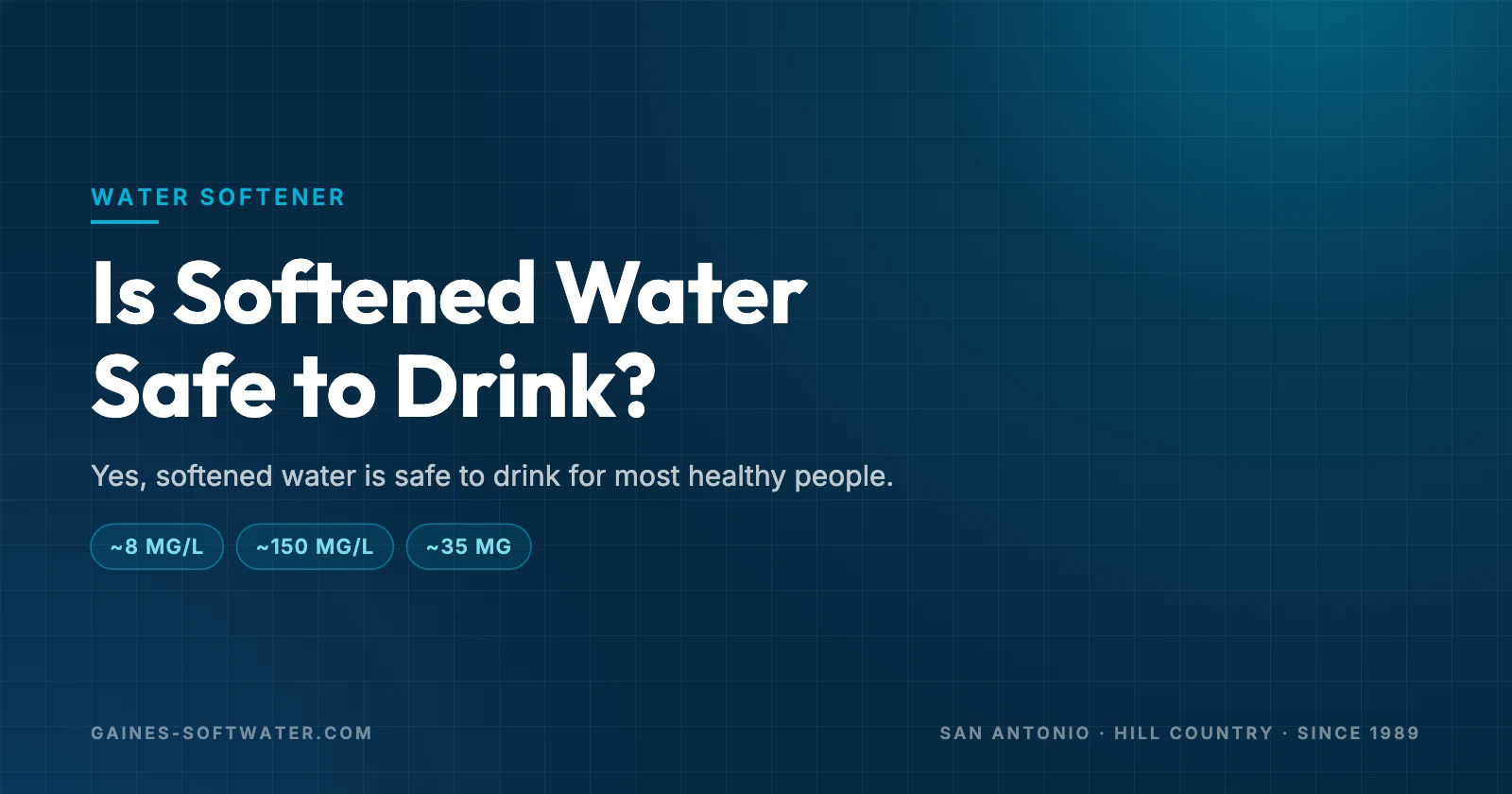
Short answer: Yes, softened water is safe to drink for most healthy people. A salt-based softener swaps hardness minerals for a small amount of sodium, roughly 35 mg in an 8 oz glass at typical San Antonio hardness. If you are on a doctor-ordered low-sodium diet, have kidney or heart concerns, or are mixing infant formula, there are simple options, like a cold kitchen line that skips the softener or an under-sink reverse osmosis system.
What this guide covers
- Is softened water safe to drink?
- How much sodium does softened water add?
- Who should talk to a doctor first
- Your drinking water options with a softener
- What a softener does not remove
- Is it healthier to drink hard or soft water?
- Softened water, babies and formula
- Pets, plants and the garden
- Can you drink from the sink with a softener?
- Getting a real answer for your house
- Frequently asked questions
Is softened water safe to drink?
For most people, yes. A water softener does not add chemicals to your water. Resin beads grab calcium and magnesium and release sodium in their place. The water that comes out is the same water you had before, with the hardness traded for a modest amount of sodium.
That trade is the only real question with softened water. Sodium does not leave crust or scale like calcium does, which is why softened water feels slick, rinses soap away cleanly and stops spotting on glass.
Hill Country and San Antonio water is hard, commonly 15 to 20+ grains per gallon. That is high enough that the sodium number is worth knowing, but not high enough to make softened water a health risk for a healthy adult. The rest of this guide gives you the actual numbers so you can decide for your own household.
How much sodium does softened water add?
The rule of thumb is simple. Ion exchange adds roughly 8 mg of sodium per liter for every grain per gallon of hardness removed. At 18 to 20 grains, which is common here, that works out to about 150 mg of sodium per liter. An 8 oz glass is a little under a quarter liter, so it carries roughly 35 mg.
For scale, the general dietary guideline for adults is under 2,300 mg of sodium a day. If you drank two liters a day at that hardness, you would take in roughly 300 mg, a bit over a tenth of the guideline. Most dietary sodium comes from packaged and restaurant food.
Your number depends on your hardness. A home at 12 grains adds less, and a Hill Country well at 30 grains adds more. Once you know your grains per gallon, multiply by 8 for a solid estimate in mg per liter.
- ~8 mg/Lsodium added per grain removed
- ~150 mg/Lat 18 to 20 grains per gallon
- ~35 mgsodium in an 8 oz glass
- 2,300 mggeneral adult daily guideline
Who should talk to a doctor first
If your doctor has put you on a low-sodium diet, ask them about your drinking water. The same goes for anyone managing high blood pressure, heart failure or kidney disease. For most of these households, 35 mg a glass is small, but your doctor knows your limits and can tell you whether it matters for you.
Take your test result to that conversation. A number like “18 grains, about 150 mg of sodium per liter softened” is far more useful than “we have a softener.”
If you switch to potassium chloride, mention that too, since some kidney patients limit potassium. We are not giving medical advice here, just the numbers to bring to someone who can.
- 1TestGet your hardness in grains per gallon from a free on-site test.
- 2CalculateMultiply grains by 8 to estimate sodium in mg per liter.
- 3AskShare that number with your doctor if you watch sodium or potassium.
- 4ChoosePick a drinking water option that fits their advice and your budget.
Your drinking water options with a softener
You do not have to choose between soft water and low-sodium water. The most common fix is a bypassed cold line to the kitchen sink. The plumber routes that one faucet around the softener, so you drink and cook with hard water while the rest of the house stays soft.
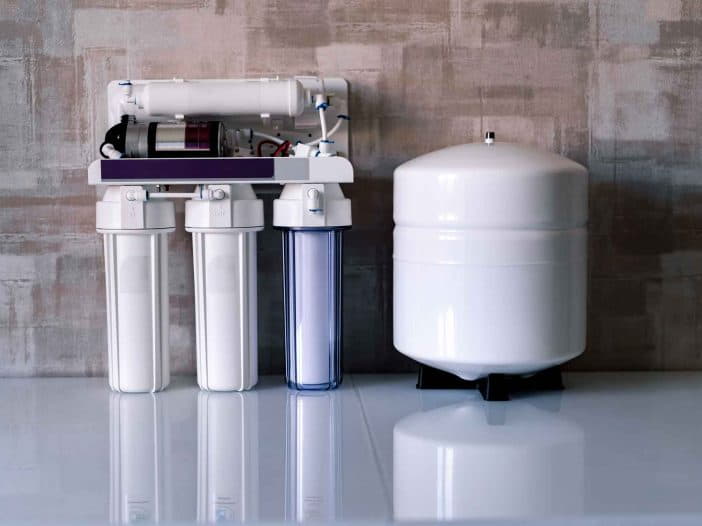
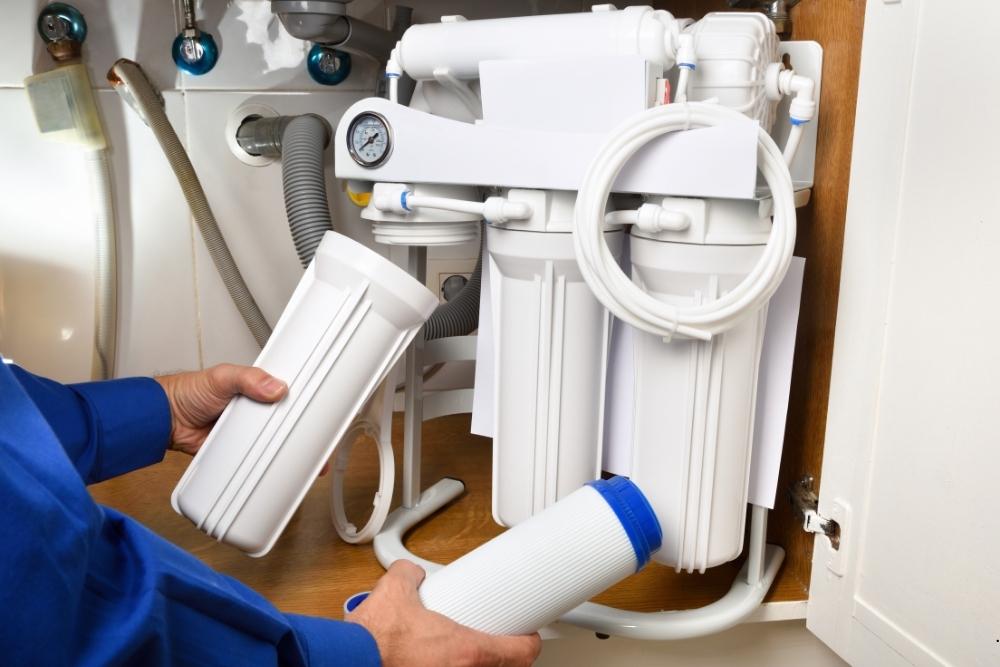
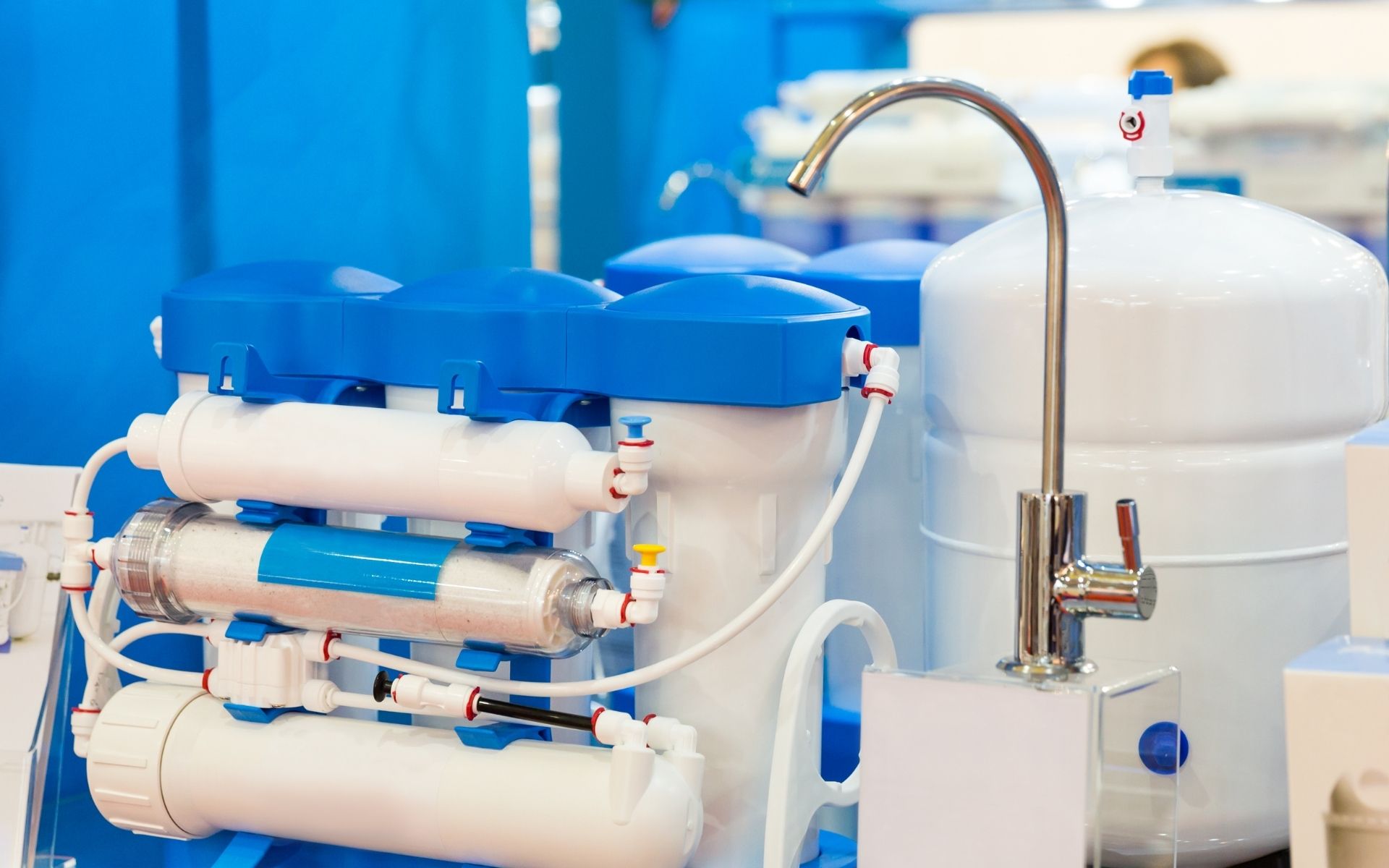
The second option is under-sink reverse osmosis. RO removes most of the sodium along with a wide range of other dissolved solids, and it typically costs $300 to $800 installed. Many San Antonio homes pair the two, since the softener protects the RO membrane from scale.
The third option is potassium chloride in place of salt. It cuts the sodium the softener adds, though it costs more per bag and some systems need a setting adjusted. Here is how the options compare.
| Option | What it does | Typical cost |
|---|---|---|
| Drink it as is | Adds about 35 mg sodium per glass at 18 to 20 gpg | Nothing extra |
| Bypassed cold kitchen line | Hard water at one faucet | Small plumbing job, best at install |
| Under-sink reverse osmosis | Removes most sodium and many dissolved solids | $300 to $800 |
| Potassium chloride | Swaps sodium for potassium in the softener | Higher cost per bag than salt |
| Salt-free conditioner | Reduces scale without adding sodium, water stays hard | Varies by system |
What a softener does not remove
This is the part people miss. A softener removes hardness, plus small amounts of dissolved iron and manganese. It does not disinfect your water, and it does not remove most contaminants. Bacteria, nitrates, arsenic and lead pass right through.
So the safety of softened water depends almost entirely on the safety of the water going in. If you are on SAWS or another city system, your utility treats and tests that water and publishes the results in an annual water quality report. If you are on a private well, nobody tests it but you, and a softener alone is not a treatment plan.
For wells around Boerne, Canyon Lake and the Hill Country, test for bacteria and nitrates on a regular schedule, not just hardness. If something shows up, the answer is filtration, disinfection or RO, sized for that problem. We cover the common tradeoffs in our post on water softener downsides.
Is it healthier to drink hard or soft water?
Hard water carries calcium and magnesium, and those are nutrients. In practice, water is a minor source of both for most people. Food, especially dairy, greens, nuts and beans, typically supplies far more. Some research has looked at links between water hardness and health, but we do not read it as a strong reason to choose one over the other.
The honest answer is that it depends on your diet and your doctor’s advice, and for most healthy people the difference is small. A bypassed kitchen line keeps those minerals in your drinking water if you want them.
If your concern is taste, try both. Some people prefer the mineral taste of hard water. Others prefer RO water, which is low in both minerals and sodium. Neither choice is wrong.
Softened water, babies and formula
Infants process sodium differently than adults, and formula is mixed to precise ratios. Because of that, many parents and pediatricians prefer not to mix formula with softened water, especially when the raw water is very hard. We suggest using an RO tap or an unsoftened cold line for formula, and asking your pediatrician what they recommend.
This is a cautious approach, not an alarm. Bathing a baby in softened water is fine. The question is only what goes into the bottle.
If you are on a private well, check with your pediatrician before using well water for formula at all, and test for nitrates and bacteria first. Nitrates in particular are a concern for infants, and a softener does not remove them.
Pets, plants and the garden
Dogs and cats can generally drink softened water without trouble. If your vet has your pet on a low-sodium diet, for heart or kidney reasons, use the same kitchen line or RO water you would use for yourself and ask your vet.
Plants are a different story. Softened water used day after day can build sodium in potting soil, and potted plants have no rain to flush it out. Houseplants do better on hard tap water, RO water or rainwater.
Outside, most softener installs leave the hose bibs on hard water. That is standard practice for lawns and gardens, and it saves salt. If yours do not, rerouting is usually a simple change.
Can you drink from the sink with a softener?
Yes. If your kitchen faucet runs softened water and you are a healthy adult, drinking softened water from it is fine. If you are not sure how your kitchen line was plumbed, ask the installer or have it tested.
Your starting water matters too. San Antonio city water comes largely from the Edwards Aquifer, a limestone aquifer, which is why it is hard. Our guide to San Antonio tap water covers what is in it, and how hard San Antonio water is covers the hardness side.
Getting a real answer for your house
Every number in this post depends on one thing: your hardness. A free on-site test gives you grains per gallon, plus iron, TDS and pH, so you can calculate your sodium and decide whether to soften the kitchen tap, bypass it or add RO.
We have tested water across San Antonio and the Hill Country since 1989. We will tell you plainly if softened water is fine for your household, and if it is, we will not try to sell you a filter you do not need.
Frequently asked questions
Is softened water safe to drink?
Yes, for most healthy people. It adds roughly 8 mg of sodium per liter for each grain of hardness removed, about 35 mg per glass at 18 to 20 grains. If you are on a low-sodium diet, ask your doctor.
Can I drink water from the sink if I have a water softener?
Yes. Most healthy adults can drink softened tap water without concern. If you watch sodium, have the kitchen cold line bypass the softener or add an under-sink RO system.
Is it healthier to drink hard or soft water?
For most people the difference is small. Hard water adds some calcium and magnesium, but food is typically a much bigger source. Your doctor can tell you if either matters for your diet.
Can you use softened water for baby formula?
Many parents prefer not to. A cautious choice is RO water or an unsoftened cold line for formula. Ask your pediatrician, and test well water for nitrates first.
Is softened water bad for plants?
Over time it can build sodium in potting soil. Water houseplants with unsoftened, RO or rain water, and keep outdoor spigots on hard water.
Does a water softener remove contaminants?
Not most of them. A softener removes hardness and small amounts of iron and manganese. It does not disinfect or remove bacteria, nitrates, lead or arsenic.
Know your sodium number, free
We test on site for free across San Antonio, Boerne, New Braunfels, Canyon Lake and the wider Hill Country. You get the numbers in writing, with no obligation to buy anything.
Related reading: water softeners, reverse osmosis systems, well water services, water treatment in San Antonio and free water testing.
More from this guide: Do I really need a water softener?, How long do water softeners last? and Water softener downsides.
Sources: Water Quality Association, EPA, Consumer Confidence Reports, San Antonio Water System.