Short answer: Reverse osmosis is the finest filtration available to a household, and it is also the most misunderstood. It belongs at the kitchen tap rather than on the whole house, and it belongs behind proper pre-treatment rather than in front of it.
What this guide covers
How reverse osmosis works
Water is pushed under pressure against a semi-permeable membrane. Water molecules pass; most dissolved solids do not, and they leave with a small waste stream.
The membrane rejects a very high proportion of dissolved minerals, salts, nitrate, arsenic, lead and a long list of other contaminants.
It is a physical barrier rather than a chemical process, which is why reverse osmosis is trusted for results that carry health weight.
- 3-5 yearstypical membrane life on well pre-treated water
- Annuallypre-filter and post-filter replacement interval
- Point of usefitted at the kitchen tap, not the whole house
- Freeon-site water test before anything is specified
What is actually in the unit
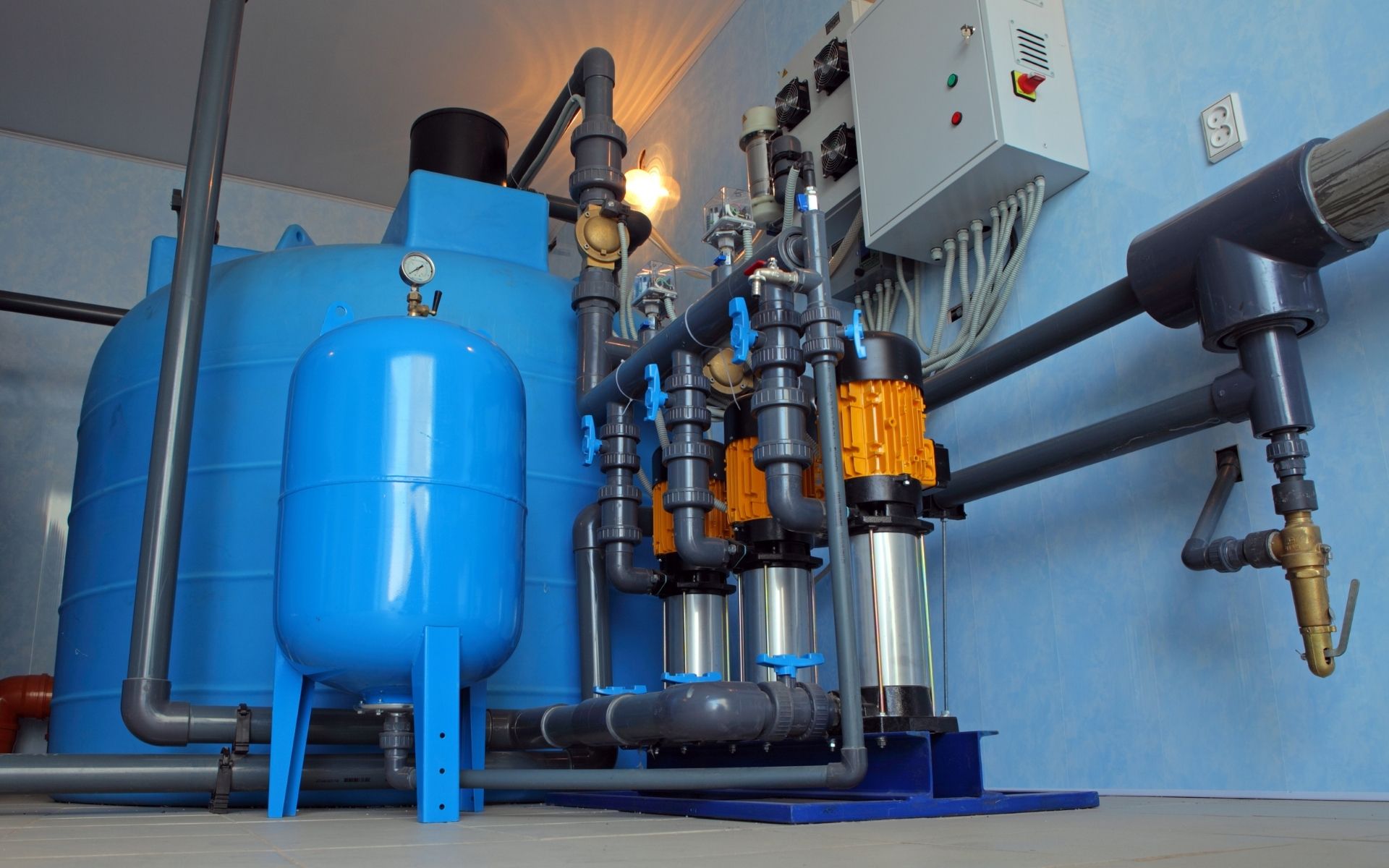
A typical system runs sediment pre-filtration first, then carbon to strip chlorine, then the membrane, then a storage tank and a final carbon polish.
The pre-filters exist to protect the membrane, which is by far the most expensive component and the slowest to replace.
Chlorine in particular destroys thin-film membranes, so on city water that carbon stage is not optional.

Why it belongs at the kitchen tap
Whole-house reverse osmosis is technically possible and almost never sensible for a family home. It is slow, it wastes water, and it strips minerals from water you only bathe in.
A point-of-use unit under the sink treats the few gallons a day you actually drink and cook with, at a fraction of the cost.
That is why we fit reverse osmosis at the kitchen sink and treat the rest of the house with softening and filtration.
- 1TestHardness, iron, nitrate and dissolved solids measured on site.
- 2Pre-treatSoftening and iron removal fitted upstream to protect the membrane.
- 3InstallUnder-sink unit fitted with its own tap and drain connection.
- 4ServiceCartridges annually, membrane every three to five years.
What has to happen upstream
Hardness scales a membrane and shortens its life dramatically, which is why a softener belongs ahead of the unit in Hill Country homes.
Iron and sediment blind the pre-filters and then the membrane itself. On a private well they must be removed before the water reaches the cabinet.
Placed behind proper treatment a membrane lasts for years. Placed on raw well water it can clog within months.
| Method | What it removes | Where it is fitted |
|---|---|---|
| Sediment filtration | Grit, sand, turbidity | Whole house, first stage |
| Carbon filtration | Chlorine, taste, odour | Whole house or point of use |
| Ion exchange softening | Calcium and magnesium | Whole house |
| Reverse osmosis | Dissolved solids, nitrate, arsenic, lead | Kitchen tap |
| Ultraviolet | Bacteria and viruses | Whole house, after clarification |
| Iron filtration | Iron and manganese | Whole house, before softening |
Taste, cooking and the waste question
The difference is most obvious in coffee, tea, ice and anything boiled, because dissolved solids concentrate as water evaporates.
Modern systems produce a waste stream while filling the tank. Efficient units have improved that ratio considerably over older designs.
For most households the volume involved is small, because the unit only produces what the tank holds rather than running continuously.
Maintenance and running costs
Pre-filters and post-filters are changed roughly annually, and the schedule is set by your water rather than by the box.
The membrane itself typically lasts three to five years on well pre-treated water, and considerably less where hardness or iron reach it.
Tank pressure is worth checking at service, because a waterlogged tank is the usual cause of a unit that suddenly delivers a trickle.
Who actually needs one
Households on a well with nitrate or arsenic have a clear case, because reverse osmosis is one of the few methods that removes both reliably.
Households unhappy with taste on city water have a comfort case, which is entirely legitimate but a different budget conversation.
Households whose water is already clean and soft often need nothing, and we say so rather than selling a stage that adds little.

How it compares with other filtration
Carbon filtration improves taste and removes chlorine but leaves dissolved solids in place.
Softening removes hardness but changes nothing about taste, nitrate or metals.
Reverse osmosis is the only one of the three that addresses dissolved contaminants at the tap, which is why the three are complementary rather than alternatives.
Getting one fitted
We fit and service reverse osmosis across Boerne, Kerrville, Fredericksburg, New Braunfels, Canyon Lake, Bandera and San Antonio.
The visit starts with a free test, because the results decide whether the unit is solving something real.
We service every major brand, including units we did not install, and we carry common membranes and cartridges.
Frequently asked questions
Does reverse osmosis remove hardness?
It removes hardness from the water it treats, but it is a kitchen tap solution. Scale in your pipes and heater still needs a softener.
Should I fit it for the whole house?
Rarely. It is slow and wasteful at that scale. Point-of-use at the sink treats the water you drink at a fraction of the cost.
How long does the membrane last?
Typically three to five years behind good pre-treatment, and considerably less where hardness or iron reach it untreated.
Does it waste a lot of water?
There is a waste stream while the tank fills, but the unit only produces what the tank holds rather than running continuously.
Do I need one on city water?
Only if you want the taste changed or a test shows something the city supply does not remove. We will tell you which applies.
Book a free test before you buy a system
We test on site for free across Boerne, Kerrville, Fredericksburg, New Braunfels, Canyon Lake and the wider Hill Country. You get the numbers in writing, with no obligation.
Related reading: reverse osmosis systems, water filtration systems, water softeners, free water testing.
More from this guide: the signs of hard water, hard water in San Antonio and hard water at Canyon Lake.
Sources and further reading: Texas Well Owner Network (Texas A&M AgriLife), EPA national primary drinking water regulations, Texas Water Development Board groundwater data.