
A fluoride water filter has to use the right technology, because most filters leave fluoride alone. Reverse osmosis removes most of it, a water softener does not, and most carbon filters do not either. Here is what is in San Antonio water, what each fluoride water filter option really does, and how to choose one for your home or well.
The short answer
Reverse osmosis is the most practical fluoride water filter for a home. The American Dental Association notes that almost all reverse osmosis and distillation units remove most fluoride when working properly, and some activated alumina and bone char filters remove significant amounts. Water softeners do not significantly change fluoride levels, and most carbon filters do not remove it.
For most San Antonio homes, that means an under-sink reverse osmosis system for drinking and cooking water, sized and tested for your supply.
Your water
Yes. San Antonio Water System adds fluoride to bring its water to 0.7 milligrams per liter (0.7 ppm), following a voter-approved 2000 ordinance; fluoridation began in 2002. SAWS reports that natural fluoride in its Edwards Aquifer water is about 0.3 ppm, and that some sources, such as Trinity Aquifer water, already carry natural fluoride near the target and do not get added fluoride.
The 0.7 level matches the U.S. Public Health Service recommendation set in 2015. The EPA’s enforceable limit for drinking water is 4.0 mg/L, with a secondary, non-enforceable standard of 2.0 mg/L aimed at preventing tooth discoloration. In 2025 the EPA began an expedited review of fluoride science, and as of our last review the 4.0 limit had not changed.
Whether to drink fluoridated water is a personal choice, and we do not take sides on the policy question. Our job is to tell you plainly which fluoride water filter does what, so the choice you make actually works.
Compared
Fluoride is a dissolved ion, much smaller than the particles most filters are built to catch. That is why so many products marketed for clean water leave it in place. The table below summarizes the American Dental Association’s guidance on common home treatment types.
| Treatment | Effect on fluoride | Notes |
|---|---|---|
| Reverse osmosis | Removes most fluoride when working properly | The practical fluoride water filter for drinking water |
| Distillation | Removes most fluoride | Slow and energy intensive, small batches |
| Activated alumina | Can remove significant amounts | Performance depends on pH, contact time and media changes |
| Bone char | Can remove significant amounts | Less common, media replaced regularly |
| Water softener | Does not significantly change fluoride | Removes hardness, not fluoride |
| Most carbon filters | Do not remove fluoride | Pitchers and fridge filters are usually carbon |
If a product claims to work as a fluoride water filter, look for independent certification that lists fluoride reduction specifically, such as NSF/ANSI 58 for reverse osmosis systems. A general claim of removing contaminants is not the same thing.

Best fit for most homes
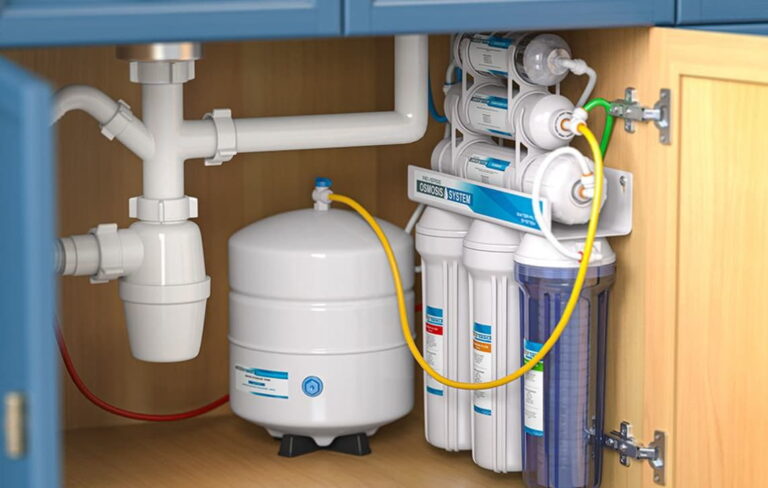
Reverse osmosis pushes water through a semi-permeable membrane that holds back most dissolved ions, including fluoride, along with sodium, nitrate and other dissolved solids. A typical under-sink system has a sediment prefilter, a carbon prefilter to protect the membrane, the membrane itself, a storage tank and a carbon polishing filter before the faucet.
Because it treats only the water you drink and cook with, reverse osmosis is affordable to run as a fluoride water filter. Laundry, showers and irrigation do not need it, so there is no reason to pay to treat them.
In San Antonio, hard water shortens membrane life, so we often pair reverse osmosis with a whole house softener. The softener protects the membrane and the plumbing, and the reverse osmosis unit handles the drinking water.
A dedicated faucet at the kitchen sink. The most common fluoride water filter we install.
Softener for the whole house, RO for drinking water. The best match for very hard San Antonio water.
An optional cartridge that adds a small amount of calcium and magnesium back for taste.
Whole house
A whole house fluoride water filter is possible, usually with activated alumina media, but it is rarely the right choice. The media works best within a narrow pH range, needs enough contact time, and must be replaced or regenerated as it loads up. Sized for a whole house, that adds up quickly in equipment and upkeep.
Fluoride matters mainly in the water people swallow. Treating every gallon used for showers, laundry and toilets means paying to remove fluoride from water no one drinks.
If you want fluoride removed at more than one tap, a second reverse osmosis unit or a line to the refrigerator usually costs far less than whole house treatment. We will walk through both options with numbers for your home.
Private wells
Wells are not fluoridated, but groundwater can carry natural fluoride, and the level varies from well to well. The only way to know what yours contains is a test.
If a well test comes back above the EPA’s secondary standard of 2.0 mg/L, a reverse osmosis fluoride water filter at the kitchen tap is the usual answer. Above the 4.0 mg/L limit, treatment is strongly advised for drinking water, and you should talk with your doctor or dentist, particularly about young children.
Wells also tend to need other stages first: sediment, iron and sulfur removal, softening and sometimes disinfection. Reverse osmosis works best on water that has already been pretreated, so we design the well system as a whole.
Buying checklist
Start with the water. A test tells us your fluoride level, hardness and total dissolved solids, which decide the membrane, the prefilters and whether a softener should go first.
Then check the product. A real fluoride water filter will list fluoride reduction in its certified performance data, not just in its marketing. Look at the replacement schedule for prefilters and the membrane, the storage tank size, and how much water the system sends to drain.
Finally, think about service. A reverse osmosis system that is not maintained slowly stops doing its job. Local service means someone checks the output and changes filters on schedule.
Good to know
Fluoride in drinking water is used to help prevent tooth decay. The American Dental Association notes that people who drink mostly filtered water that removes fluoride may miss that benefit.
If you install a fluoride water filter, it is worth mentioning to your dentist, especially for children, so they can advise on other sources of fluoride such as toothpaste or treatments. That is a conversation for you and your dentist; we simply make sure the equipment does what you chose it to do.
Upkeep
Reverse osmosis prefilters are typically changed every six to twelve months, and the membrane every few years, depending on your water and use. Hard water shortens those intervals, which is another reason a softener ahead of the system pays off.
A simple TDS check at the faucet shows whether the membrane is still performing. If the number climbs over time, the fluoride water filter is letting more through and needs service.
Our maintenance plans cover filter changes and checks for reverse osmosis units and softeners, so you do not have to track the schedule yourself.
Questions
No. The American Dental Association notes that water softening does not significantly change fluoride levels. A softener removes hardness minerals like calcium and magnesium.
Most pitcher and refrigerator filters use activated carbon, and most carbon filters do not remove fluoride. Check the product’s certified performance data for fluoride reduction before relying on one.
For most homes, an under-sink reverse osmosis system is the most practical fluoride water filter. It removes most fluoride from the water you drink and cook with, along with other dissolved solids.
SAWS adjusts its water to 0.7 milligrams per liter, the level recommended by the U.S. Public Health Service. Natural fluoride in its Edwards Aquifer water is about 0.3 ppm.
It is possible with activated alumina, but it is costly to size and maintain and treats water no one drinks. Reverse osmosis at the taps you drink from is usually the better value.
Wells are not fluoridated, but groundwater can carry natural fluoride and levels vary by well. Test your well to find out.
We test for free across San Antonio, Boerne, New Braunfels, Canyon Lake and the Hill Country, then recommend the fluoride water filter that fits your water and your home.