
Whole-home water treatment systems are built around test results, not packages. We measure hardness, iron, sulfur and clarity first, then specify water treatment systems that match the house, the household and the supply feeding it.
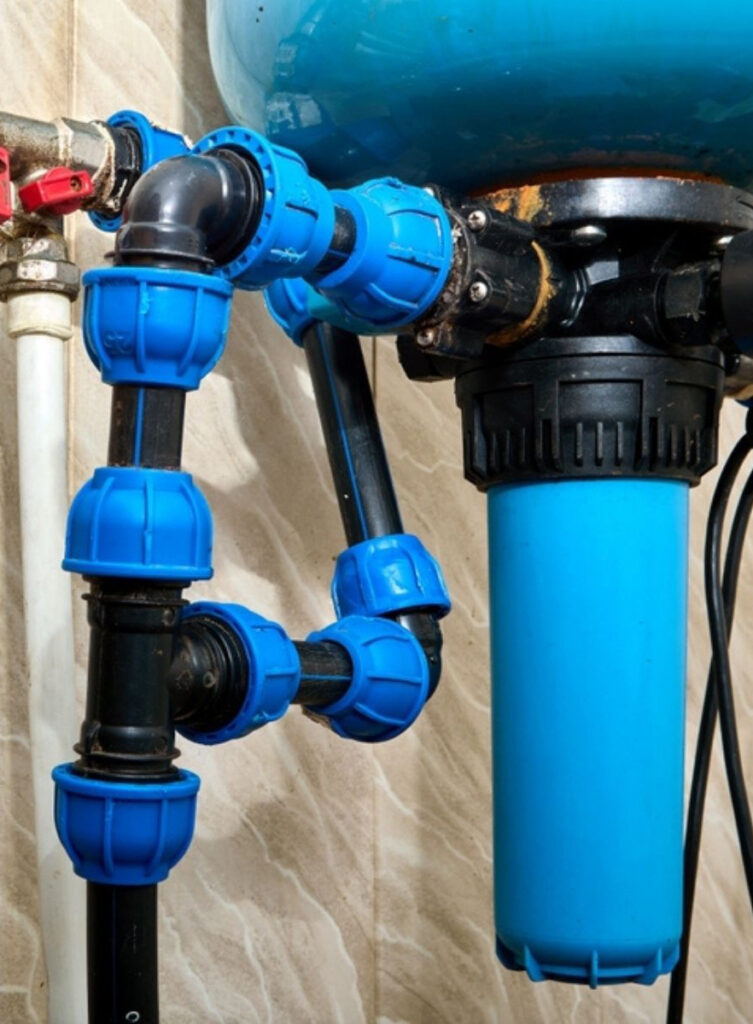
Water arriving at your house carries several different problems at once, and no single piece of equipment solves all of them. Hardness needs ion exchange. Chlorine needs carbon. Iron needs oxidation. Bacteria needs ultraviolet. Dissolved solids need a membrane.
A treatment system is those stages arranged in sequence so that each one handles what it is good at and shields the stage behind it from what would damage it. Sediment first because grit wrecks everything. Iron before softening because iron fouls resin. Carbon before RO because chlorine destroys membranes.
Which stages you actually need comes entirely from the test. Plenty of homes on the city supply need two. A well can need five or six. We build what the numbers justify and nothing more.
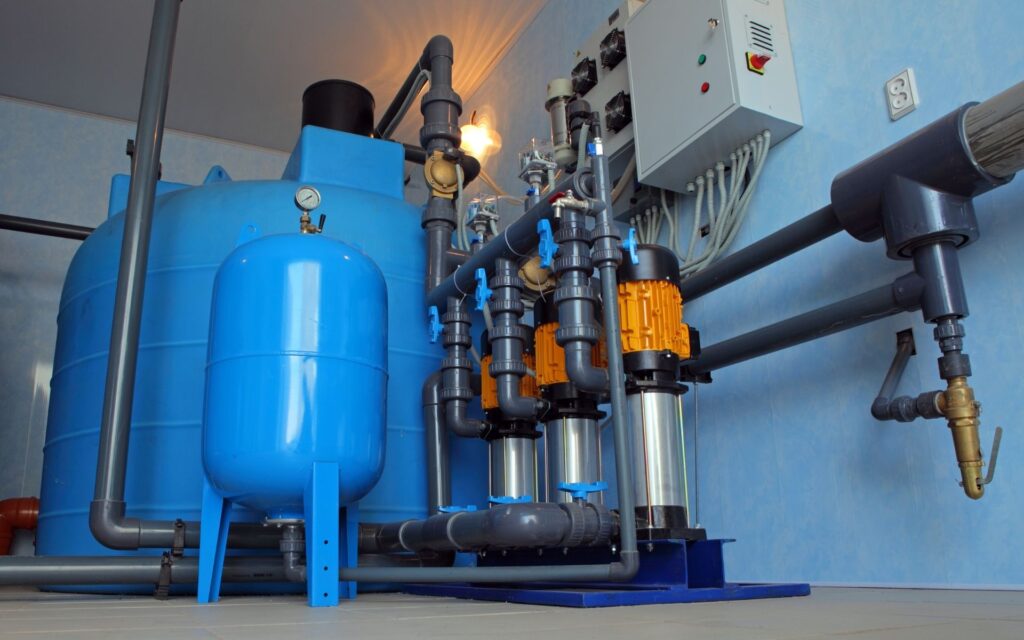
Not every home needs all six. Almost no home needs none of them.
Catches sand, silt and scale fragments. The cheapest stage in the system and the one that keeps every expensive component behind it alive.
Oxidation and filtration for the metals that stain fixtures and foul softener resin. Common on wells, rare on treated city supplies.
Hydrogen sulfide, the rotten-egg smell, needs oxidation or specialist media. Carbon on its own will not hold it for long.
Ion exchange removes the calcium and magnesium that scale pipes, heaters and appliances. Sized from your grains per gallon and household use.
Adsorbs chlorine, chloramine and the compounds behind bad taste and odor, and protects any reverse osmosis membrane downstream.
Inactivates bacteria on private wells. It goes last, after everything that would otherwise cloud the water and block the light.
New builds, retrofits, and rescuing systems that were assembled in the wrong order by somebody else.
We test, then specify each stage, its size and its position, and give you a written design with a firm price before anything is ordered.
The multi-stage systems a private well usually needs, built so the softener is protected rather than sacrificed.
Sized from peak flow and duty cycle, with twin-tank configurations where the supply cannot be interrupted.
Existing equipment in the wrong sequence is common. Often we can re-plumb what you have rather than replace it, and we will say so if that is the case.
Put a softener in front of untreated well iron and you will be replacing resin in two years instead of ten. Put a reverse osmosis membrane downstream of chlorinated water with no carbon in between and you will be buying membranes annually. Put UV in front of the sediment filter and the lamp cannot see through the water it is meant to be treating.
None of these are exotic mistakes. They are what happens when equipment is bought piecemeal from different places over several years, which describes a lot of the systems we are called out to look at.
Nobody should buy a water system from a brochure. Here is what actually happens.
We test what is coming out of your tap or your well, hardness in grains per gallon, iron, pH, odor, sediment, and look at your plumbing. About twenty minutes, no charge.
A written recommendation and a firm price based on your numbers and your household use. If a smaller unit does the job, we say so.
Installation by a licensed technician, then filters, settings checks and 24/7 repair for as long as you own the system.
We are not a franchise and we are not a call centre. The person who tests your water works for the company that installs and services it.
Deep roots in San Antonio and the Hill Country, and customers who have been with us for decades.
Class 3 certified by the Texas Water Commission and licensed by the Water Quality Association.
We install and service all major brands, even if the system was not purchased from us.
A leaking or failed system does not wait for business hours. Neither do we.
From single-family homes to restaurants, salons and industrial facilities, sized to the load.
On-site testing and a written estimate cost nothing, with no obligation attached.
This page is the architecture. These are the components.
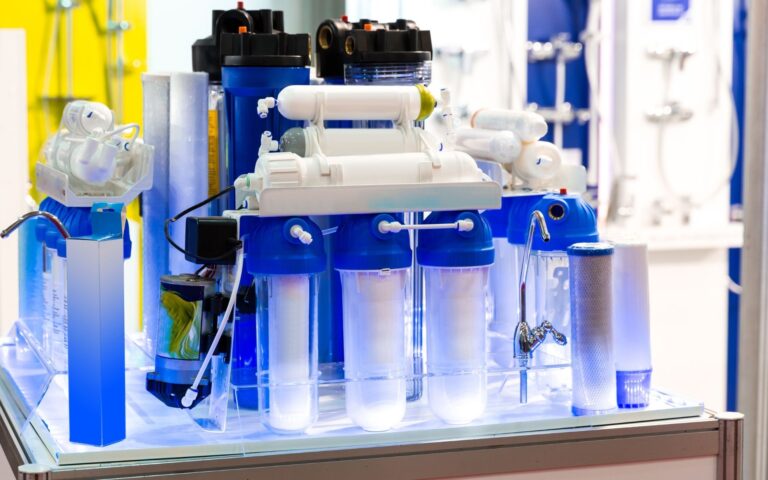
Ion-exchange softening sized to your hardness reading, for city and well supplies.
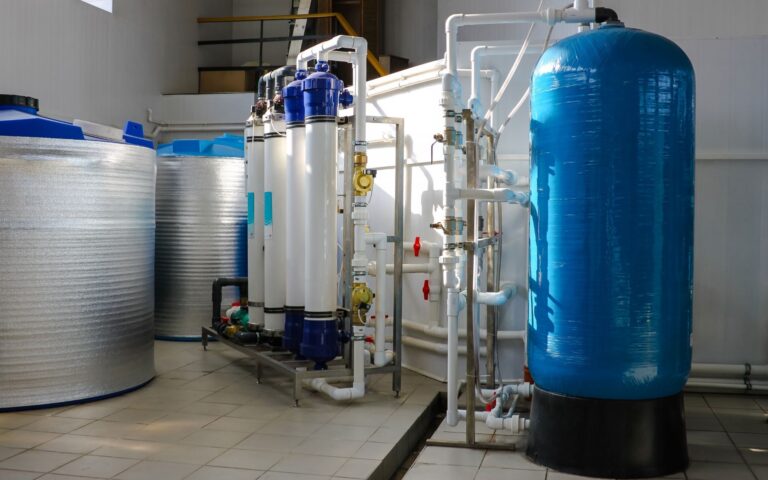
Carbon and sediment stages for chlorine, taste, odor and grit at every tap.
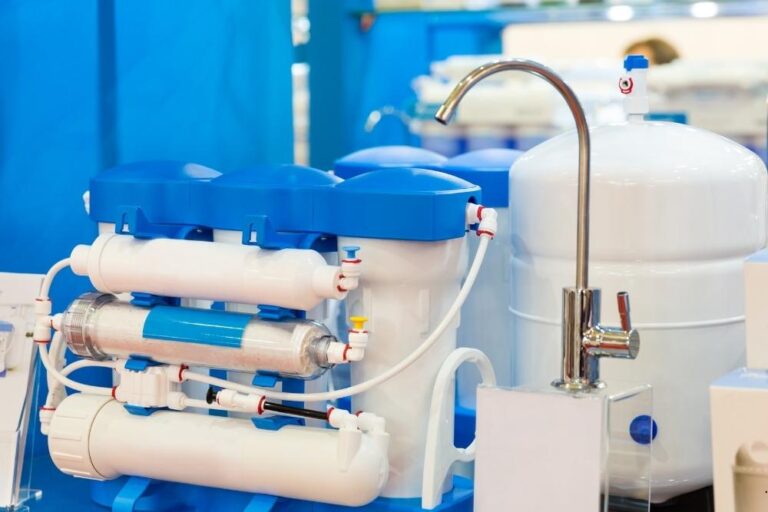
Under-sink RO for drinking and cooking water, removing the dissolved solids filtration leaves behind.
From the test. Hardness alone means a softener. Hardness plus chlorine means a softener and carbon. A well with iron, sulfur and bacteria can need five or six stages. There is no way to answer this without measuring the water first.
Often yes, and we design with that in mind where budget is a factor. What matters is leaving the right space and the right plumbing connections so the later stages can go in the correct position rather than wherever there is room.
Usually not. A lot of what we see is decent equipment installed in the wrong sequence or sized for the wrong load. Re-plumbing and resizing is frequently cheaper than replacing, and we will tell you honestly which one applies.
No, and we say so regularly. Plenty of homes on the San Antonio city supply need softening and a carbon stage and nothing else. The full treatment train is a well water answer, not a universal one.
A softener and carbon pair takes roughly the footprint of two water heaters. A full well train needs more, typically a garage wall or a utility area. We check the space during the test and design to what you actually have.
It depends entirely on how many stages your water justifies, which is why we will not quote before testing. After the test you get a written design and a firm price, stage by stage, so you can see exactly what each part is for.
Water treatment systems are assembled from stages rather than bought off a shelf. What varies between houses is which stages are needed and how big each one has to be.
The starting point is always a test. Water treatment systems specified without measuring hardness, iron and clarity are guesses, and guesses are what we spend most of our repair time replacing.
On San Antonio city water, most water treatment systems are simple. A softener for hardness, carbon filtration for chlorine taste and smell, and a reverse osmosis tap if you want better drinking water.
On a private well, water treatment systems get longer. Sediment, then iron and manganese, then sulfur, then softening, then disinfection if bacteria are present, in that order without exception.
Order matters more than brand. Iron reaching a resin bed will destroy it, so water treatment systems that soften before removing iron fail early no matter whose name is on the tank.
Flow rate sizes the hardware. Water treatment systems that strangle household pressure get bypassed, so we size vessels to your pump or main and to how many bathrooms run at once.
Maintenance should be designed in. Backwashing needs a drain, UV lamps are annual, cartridges are scheduled. Water treatment systems you cannot service are systems you will eventually switch off.
We install, service and repair water treatment systems from every major manufacturer across San Antonio and the Hill Country, including equipment we did not supply.
| Supply | Typical stages | Notes |
|---|---|---|
| San Antonio city water | Softener, carbon filter, RO tap | Chlorine and hardness are the main issues |
| Hill Country city water | Softener, carbon filter | Hardness usually 15 to 25 grains per gallon |
| Clean private well | Sediment, softener | Test still needed to confirm |
| Well with iron | Sediment, iron filter, softener | Iron must come out before the resin |
| Well with sulfur | Aeration or carbon, softener | Softening alone will not touch odor |
| Well with bacteria | Full train plus UV | Inspect wellhead before fitting UV |
How much do water treatment systems cost? It depends entirely on how many stages your water needs. We quote after testing, never before, because a price given without a test is a guess.
Can I add to a system later? Yes. We plan the plumbing so water treatment systems can be extended in stages without redoing the work already done.
How long do they last? Softener resin typically ten to fifteen years, carbon five to eight, UV lamps annually. Maintained systems last; neglected ones do not.
Do you service other brands? Yes, all of them, including water treatment systems we did not install.
Comparing quotes is easier when the stages are itemised. Ask each company to list what every vessel in the proposed water treatment systems is rated for and at what flow, because that is what makes competing quotes genuinely comparable.
Space and drainage decide the layout. Water treatment systems need somewhere to sit, a drain for backwash, and power for UV, and it is far cheaper to plan that at the start than to retrofit it later.
Resale value is worth a thought. Buyers ask what the water treatment systems are and when they were last serviced, and a folder of test results and service records answers that in seconds.
Do water treatment systems need planning permission or inspection? No, but they do need correct drainage and backflow protection. We fit water treatment systems to plumbing code and leave the paperwork with you.
Will water treatment systems reduce my water pressure? Not when sized correctly. Undersized water treatment systems are the usual cause of pressure complaints, which is why we size to measured flow rather than to catalogue figures.
Check any of this against the primary sources:
Free on-site test, a written stage-by-stage design, and a firm price with no obligation.